


A foundational movement pattern, the hip hinge shows up any time you pick something off the ground, jump, sprint, or load your posterior chain in the gym. It is arguably the most important pattern for getting stronger and building hamstrings and glutes. It also helps you deadlift more weight and stay pain-free when lifting and living.
Take Your Fitness To The Next Level


Even though it looks simple, getting the hip hinge dialed in can be tricky. Most people naturally want to fold (round and collapse) instead of hinge (push hips back with a neutral spine). With the right cues and a little practice, you can groove it fast. It is absolutely worth the effort.
Quick Answer
A hip hinge is bending at the hips while keeping a neutral spine and pushing your glutes back. You should feel tension in your hamstrings, your core should stay braced, and your torso angle changes without turning it into a squat. Master the pattern first, then load it with deadlifts, RDLs, hip thrusts, swings, and pull-throughs.
Key Takeaways
| What to focus on | How it should feel | Big mistake to avoid |
|---|---|---|
| Hips go back, spine stays neutral | Hamstrings stretching as you hinge down | Rounding your low back to get lower |
| Small knee bend, not a squat | Glutes and hamstrings doing the work | Bending knees too much and dropping hips |
| Brace your core before moving | Stable trunk, controlled descent | Loose core and “floppy” torso |
| Load progressively | Reps stay crisp and repeatable | Maxing out before your hinge is solid |
In this post, we will go over everything you need to know about the hip hinge, including:
- What is a hip hinge exercise?
- Hip hinge muscles worked and benefits
- Correct hip hinge form
- 8 best hip hinge exercises
- Programming tips for hip hinge exercises

What Is a Hip Hinge Exercise?
First, a hip hinge is not an exercise. It is a category of movements that target the lower back, glutes, and hamstrings. Any activity that involves bending at the hip joint and shifting the glutes back while maintaining a neutral spine position is a hip hinge.
Being able to perform a hip hinge movement involves hip hinge mobility and proper hip hinging form.
What exercises involve hip hinges?
As mentioned, the hip hinge movement pattern is one of the fundamental movement patterns along with the squat, push, and pull.
The most common hip hinge exercise is the deadlift. Not every hip hinge is a deadlift, but every deadlift is a hip hinge. Romanian deadlifts and trap bar deadlifts are examples of hip hinges.
In addition to deadlifts, the snatch and clean are hip hinges, as are kettlebell swings, hip thrusts, and good mornings.
A lesser-known example of a hip hinge is a vertical jump. Think about when you jump up on a box or reach up to touch a basketball rim. What is the first movement? It is a hip hinge.
A lot of exercises involve an isometric hip hinge as well. Think of barbell rows, standing rear delt raises, and standing dumbbell kickbacks.
Hip Hinge Muscles Worked
Since the hip hinge motion involves a collection of exercises, not a single lift, the muscles involved vary slightly. However, all hip hinges train the posterior chain muscles: glutes, hamstrings, and lower back.
Glutes
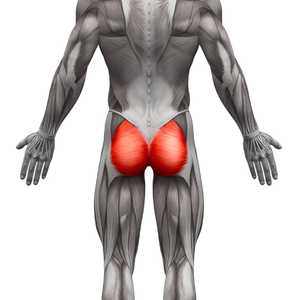
Glute training is no longer an afterthought. With the rise of social media, glutes are in style. However, having a well-developed backside is good for more than Instagram likes. The glutes are strong muscles critical to performing well in many athletic events.
Although all hip hinge movements train the glutes to some extent, the barbell hip thrust is a gold-standard glute exercise. Made famous by Bret Contreras, more glutes have been built with hip thrusts than almost anything else.
Hamstrings

The hamstrings are a primary mover in most hip hinge exercises. As you hinge forward, you create a stretch in the hamstrings. The hamstrings then contract to reverse the hinge pattern and return to standing.
A Romanian Deadlift (RDL) might be the purest example of a hip hinge exercise, and it is no coincidence the RDL is one of the best hamstring exercises you can do.
Erector Spinae

How often have you heard “lift with your legs, not your back” when moving furniture or picking up a heavy box? Even with great form, your lower back is still active any time you pick something off the ground.
The spinal erectors are important stabilization muscles during hip hinges. The erector spinae must contract isometrically to maintain a neutral spinal position during the movement.
Check out the Best Erector Spinae Exercises to make sure you're including them in your routine.
Adductors, quads, core, and upper back
Depending on the exercise, muscles besides the glutes, hamstrings, and lower back come into play, most notably the adductors, quads, core, and upper back. Examples of movements that require these muscles include the deadlift, hip thrust, and clean.
Why the Hip Hinge Movement Matters
Not many gym patterns are as versatile as the basic hip hinge. It provides aesthetic, performance, and functional benefits. Everyone from an elite athlete to your grandmother can benefit from hip hinge exercises.
In addition to the benefits below, hip hinge exercises strengthen your posterior chain and ensure your large lower body muscles are activated, which can help prevent or improve anterior pelvic tilt and posterior pelvic tilt.
1. Hip hinge movements build muscle
If you want to build muscle along your posterior chain, mastering the hip hinge is a must. A program including deadlifts, Romanian deadlifts, hip thrusts, and the cable pull-through is a great way to add muscle to your back, hamstrings, and glutes.
2. They improve strength and power
The deadlift is one of the three powerlifting exercises, so it is required if you want to compete. It is also excellent for improving general muscular strength and power. A 2020 study found that the deadlift significantly increased gains in maximal strength and power of the lower body1.
3. Hip hinging can improve your vertical jump
The vertical jump is a great measure of explosive strength and power. Research in the Journal of Strength and Conditioning Research found that ten weeks of barbell deadlift training improved vertical jump height2. If you want to jump higher, start deadlifting.
4. Hip hinge exercises can help with low back pain
Back pain is one of the most common ailments for adults. Although not a cure, one way to help reduce the odds of back issues is to make your back stronger. Researchers found that eight weeks of deadlifts as a rehabilitation exercise improved back pain, especially for those with lower pain intensity3.
5. Hip hinging can improve sprint performance
Sprinting performance is critical in many sports. A 2019 systematic review examined the barbell hip thrust and found it improved sprint time in the short and long term4.

How to Properly Do a Hip Hinge
Learning the basics of the hip hinge movement pattern transfers to nearly every posterior chain lift. You can practice the hinge at home without equipment.
Correct Form For The Hip Hinge:

- Stand in an athletic position with your feet shoulder-width apart. If comfortable, you can point your toes out slightly.
- Stand tall in a straight line with your chest up. Take a deep belly breath and brace your core.
- To begin the movement, break at your hips, allow your chest to come down, and move your butt toward the wall behind you. Keep a slight knee bend.
- During the movement, keep your back flat. Think of holding a broom handle along the spine.
- Stop once your upper body is parallel with the floor. You should feel a deep stretch in the hamstrings.
- To stand back up, drive your hips forward while keeping your chest up.
Avoid These Common Hip Hinge Mistakes
If you can't do a proper hip hinge, you may be making one of these mistakes. Correcting them is the fastest way to improve.
Mistake 1: Rounding your back
The biggest error is allowing the back to round. Multiple factors can cause this, but a common one is limited hamstring or hip mobility. Performing hamstring stretches and hip mobility exercises can help keep the back straight and improve your range of motion.
Mistake 2: Bending your knees too much
We want to avoid turning the hip hinge into a squat. Maintain only a slight bend in the knee and keep the hips relatively high and pushed back throughout the movement. If you need to bend your knees more, it may mean your hips are not back far enough.
8 Best Hip Hinge Exercises
Here are the eight best hip hinge exercises. Putting these exercises together leads to an incredible hip hinge workout that targets the entire body. These are the moves to build your training program around.
1. Barbell Deadlift

When you think of hip hinge exercises, the first one that should come to mind is the deadlift. The deadlift is the king of all hip hinge exercises. Packed with deadlifting benefits, the move is excellent for building muscle along the posterior chain and improving strength, power, and performance.
If you're new to this move you may notice your lumbar spine area is sore, which is because the deadlift is working and strengthening your low back muscles.
How to do the Barbell Deadlift:
- Stand facing a barbell, with your shins an inch away from the bar and your feet about shoulder-width apart. The bar should be in the middle of your foot.
- Hip hinge to get into position. Grab the bar outside your knees, and keep your arms locked throughout the movement.
- In the starting position, maintain a neutral spine with your hips above parallel, creating tension in your hamstrings. Begin the movement by taking a deep belly breath, bracing your core, and pulling the bar off the ground by extending your knees and hips.
- Your hips and shoulders should rise together at the same time. Once the bar passes the knees, drive your hips forward to finish the movement.
- Maintain a neutral spine as you lower the bar to the starting position.
2. Barbell Good Morning

Although popular in the powerlifting community, you don't see many good mornings done by average gym lifters. It looks intimidating and dangerous, but it can be highly beneficial if you do it correctly.
How to do Barbell Good Mornings:
- Start with the barbell resting in a squat rack around chest height. Grasp the bar with a slightly wider than shoulder-width grip. With a tight grip, step under the bar and position your feet parallel.
- Squeeze your shoulder blades to create a "shelf" for the bar to rest. Place the bar in a balanced position across your upper back and shoulders.
- After you remove the barbell from the stand, take two short steps straight back. Your feet should end up in a slightly wider than shoulder-width stance.
- To begin the movement, bend your knees slightly, and hinge forward at the hips. While hinging, push your hips and glutes back. Maintain a neutral spine with a slight arch in your lower back and lower torso until the spine is nearly parallel with the floor.
- Keep your core tight and lift your torso to return to the starting position.
3. Barbell Romanian Deadlift

The Barbell Romanian Deadlift (RDL) places more emphasis on the hamstrings than a traditional deadlift, making it a gold standard for hamstring development. The eccentric focus can cause a lot of muscle soreness.
Don’t be surprised if your hamstrings are incredibly sore the day after doing these for the first time. This is one of my favorite glute and hamstring exercises!
How to do the Barbell Romanian Deadlift:
- Unlike a traditional deadlift, the Romanian Deadlift starts with the barbell in a rack, just above your knees.
- Stand at about shoulder-width stance, grab the bar with an overhand or mixed grip, brace your core, and lift the bar out of the stand by extending your knees. From there, take a step back to get into the starting position.
- Once in the starting position, brace your core again, and begin the exercise by hinging at your hips. While hinging, bend forward and push your hips backward as the bar slides down your thighs. Maintain a slight knee bend during the movement.
- Once the bar gets lowered to your mid-shin, reverse the movement by driving your hips forward and extending your torso back to the starting position.
4. Trap Bar Deadlift

The traditional barbell deadlift can be challenging to master when first starting a lifting program. A great alternative is a trap bar deadlift (we've got a great article that explains the differences between the trap bar vs. traditional deadlift if you'd like more information on the two moves).
The movement pattern is nearly the same, but the handles are at your sides, allowing you to get in a better starting position. The trap bar deadlift is a great introduction to hip hinge exercises. That said, it can be a strong option for experienced lifters too.
How to do the Trap Bar Deadlift:
- Begin by stepping into the middle of the trap bar, with your feet shoulder-width apart. Hip hinge down to reach the trap bar handles. You can perform the movement with the handles in the high or low position.
- In the starting position, your back should be flat, with your hips back and chest up. Begin the movement by bracing your core and pulling the bar off the ground by extending your knees and hips.
- Your hips and shoulders should rise at the same time.
- Once you reach the standing position, reverse the movement to bring the trap bar back to the ground.
5. Barbell Hang Power Clean

The hang power clean is one of the most straightforward Olympic lift variations. It provides a foundation to learn other Olympic lifts, and the power clean is an excellent movement to develop lower body explosiveness.
How to do the Barbell Hang Power Clean:
- Start in the hang position, standing, with the bar above your knees. Your feet should be slightly wider than shoulder width. When you begin the movement, lower the bar below your knees by slightly bending your legs.
- From there, explosively use your legs to push against the floor, extending your hips and legs. As the bar reaches mid-thigh, explode your hips forward, and continue to use the lower body to drive the bar up.
- Use your lats to drive the bar back into the upper thighs. When your hips meet the bar, jump while shrugging the shoulders and whipping the elbows around the bar. End in a front rack position in a quarter squat.
- Stand up to complete the rep.
6. Barbell Hip Thrust

The barbell hip thrust is arguably the best glute-building exercise there is. The benefits don’t stop with aesthetics. Glute strength plays a role in athletic movements like running and jumping.
How to do Barbell Hip Thrusts:
- Place your upper back on a bench with a barbell across your hips. Hold the barbell in place with your hands.
- Keep your feet planted firmly on the ground in front of you, at about shoulder width. This is the starting position.
- To begin, drive your hips toward the sky, engaging your glutes at the top. Perform the movement slow and controlled. It’s a small range of motion, so raise your hips as high as possible.
- Once you reach full extension, hold for a count, then lower back to the starting position.
7. Kettlebell Swing

Kettlebells exploded onto the fitness scene, and it wasn't long before the kettlebell swing became a staple in gyms nationwide. The swing is versatile: explosive power, strength and muscle, and conditioning in one move.
Once you can hip hinge effectively, the kettlebell swing is easy to learn. It hits upper body, core, and lower body and reinforces strong hip extension. Fun Fact: Kettlebell swings are one of my favorite exercises to include in a Golf Workout Program!
How to do the Kettlebell Swing:
- Stand with a kettlebell about a foot in front of you on the ground. Your feet should be shoulder-width apart. Hip hinge and reach to grab the kettlebell handle with both hands.
- Raise the kettlebell and allow it to swing between your legs like you are hiking a football. Maintain a flat back with your knees slightly bent.
- To lift the kettlebell into the air, drive your hips forward. Don't use your arms to raise the kettlebell. The hips generate the movement.
- Raise the kettlebell to shoulder height before allowing it to swing down and back through your legs.
8. Cable Pull Through

The cable pull-through is a fan favorite glute exercise. It is an excellent complement to barbell hip thrusts and makes a great finishing exercise.
How to do the Cable Pull Through:
- Start with a rope attachment connected to a low pulley cable station.
- Facing away from the weight stack, reach down and grab the ends of the rope in each hand. The rope should be between your legs.
- Slightly bend your knees and hip hinge to lower the torso to a 45-degree angle.
- Perform the movement by driving your hips forward and raising your torso to a standing position. As you push the hips forward, squeeze the glutes.
- Lower the weight stack by reversing the movement.
Most Important Hip Hinge Exercise
Two movements stand above the crowd: the deadlift and hip thrust. With the deadlift, you have the best vertical hip hinge. With the hip thrust, you have the best horizontal hip hinge.
If you could only choose two, these are the best and all you would need. The combination of the deadlift and hip thrust is excellent for strength, muscle hypertrophy, mass gain, and performance.
This is not to say other hip hinge exercises are useless. However, most other hip hinges besides the deadlift and hip thrust act as assistance work that supports those big rocks.

Programming Tips for Hip Hinge Exercises
Get the most out of your hip hinges by following these programming tips.
- Since most hip hinge exercises are compound movements, rest for 2 to 5 minutes to maintain performance for multiple sets.
- You can train the barbell hip thrust using a variety of rep ranges. Anywhere from 5 to 20 reps can be effective, depending on your lifting goals.
- Stick to under eight reps for the deadlift.
- The glutes respond well to frequency. Don’t be afraid to train them multiple times per week. One day can be deadlift focused, while another day is hip thrust focused.
- If you struggle with hip hinge exercises, include bodyweight hip hinges in lower body warm-ups for extra practice.
Hip Hinge Exercises: The Secret to Improved Athletic, Strength, and Aesthetic Gains
The hip hinge is widely considered one of the most important movement patterns for new and advanced lifters to master. The skill transfers to improving your deadlift and hip thrust and can improve how you look and perform in athletic events. If you want to build strength and muscle, these movements belong in your routine.
The key is learning correct technique, then adding several of these moves to your workout split. After finishing this article, you have everything you need to take advantage of the many benefits of the hip hinge. Now it is time to get started.
Related:

Prepare to maximize your strength with our exclusive 13-week strength training program. 3, 4, and 5 day per week programming options.
References:
- Nigro, Federico, and Sandro Bartolomei. "A Comparison between the Squat and the Deadlift for Lower Body Strength and Power Training." Journal of Human Kinetics, vol. 73, no. 1, Jul 21, 2020, pp. 145–152, 10.2478/Hukin-2019-0139.
- Thompson, Brennan J, et al. "Barbell Deadlift Training Increases the Rate of Torque Development and Vertical Jump Performance in Novices." Journal of Strength and Conditioning Research, vol. 29, no. 1, 2015, pp. 1–10, www.ncbi.nlm.nih.gov/pubmed/25226322, 10.1519/JSC.0000000000000691.
- Berglund, Lars, et al. "Which Patients with Low Back Pain Benefit from Deadlift Training?" Journal of Strength and Conditioning Research, vol. 29, no. 7, July 2015, pp. 1803–1811, 10.1519/jsc.0000000000000837.
- Neto WK, Vieira TL, Gama EF. Barbell Hip Thrust, Muscular Activation and Performance: A Systematic Review. J Sports Sci Med. 2019 Jun 1;18(2):198-206. PMID: 31191088; PMCID: PMC6544005.
0 comments