


The dumbbell pullover is one of those old-school bodybuilding moves that refuses to die (for good reason). It trains shoulder extension while loading the lats and chest through a deep stretch, which makes it a sneaky-good add-on for back day, chest day, or upper-body accessories.
Compound lifts should stay the main characters, but the pullover is a perfect supporting actor. It builds muscle, teaches control in an overhead position, and gives you that “ribcage and upper body opened up” feeling when done right. Plus, it was a staple in Arnold’s lat-building arsenal, and if it worked for the Austrian Oak, it probably deserves at least a trial run in your program.
Take Your Fitness To The Next Level


| Key Takeaways | What to Do |
|---|---|
| Pullover can bias lats or chest | Elbows slightly flared and “pull with lats” for back, elbows tucked and “press with pecs” for chest |
| Form and tempo matter more than load | Use a slow lowering phase, keep ribs down, and stop before your shoulders complain |
| It is not an ego lift | Pick a weight you can control for 8 to 15 reps without bouncing or arching hard |
| Great as a finisher or superset piece | Pair with rows, pull-downs, or presses to stack tension and pump |
This post will discuss:
- What is a dumbbell pullover?
- How to do a dumbbell pullover and common mistakes to avoid
- Dumbbell pullover muscles worked
- Benefits of dumbbell pullovers
- Dumbbell pullover variations and alternatives
- Dumbbell pullover programming tips
- Sample workout

What Is a Dumbbell Pullover?
Usually performed lying on a flat bench, the dumbbell pullover is an upper-body accessory lift that trains shoulder extension and loads the chest and lats in a long range of motion. Bodybuilders love it because it can hit two big muscle groups in one movement, and lifters love it because it can plug into either a chest or back routine without needing a complicated setup.
Another underrated benefit is the positioning. Because your arms move overhead while you keep your torso stable, you end up challenging your ribcage mechanics, core control, and overhead comfort. Some people also use the pullover as a “loaded stretch” to practice deeper breathing in the bottom position. Just keep expectations realistic: it can feel great for expanding the chest and lats, but it is not a magic lung-expander. It is still a strength training exercise, and the biggest driver of results is consistent progressive training.
One more thing: small form tweaks can bias the pullover toward more lat involvement or more chest involvement. The movement looks the same to most people watching, but you will feel a different primary “pull” depending on elbow position, shoulder path, and what you focus on contracting.
Let’s get into the correct way to do it.
How to Do a Dumbbell Pullover
The lying dumbbell pullover works well on both chest and lats, which is why we like it for chest day and back day. The main difference between a chest-biased pullover and a lat-biased pullover comes down to subtle adjustments in elbow position and intent. Either way, a strong mind-muscle connection matters a lot here. If you rush the reps, you will turn it into momentum and shoulder stress.
If you want to make it harder without jumping to a massive dumbbell, you can try a double-dumbbell pullover (one dumbbell in each hand). It is more unstable and can feel more challenging at lighter loads.
How to do the Dumbbell Pullover:

- Lie flat on a bench with feet flat on the floor and knees bent. Hold one dumbbell by the top end with both hands, palms facing each other, dumbbell vertical beneath your hands.
- Squeeze glutes, brace core, and start with the dumbbell above your chest. Keep a soft bend in your elbows and keep that elbow angle consistent throughout the set.
- Slowly lower the dumbbell overhead in a controlled arc. Only go as far as you can while keeping ribs down and your torso stable. You should feel a deep stretch through the lats and or chest depending on your bias.
- Reverse the motion under control and bring the dumbbell back to the start without “throwing” it. Think smooth and strong, not fast and floppy.
- Chest bias: Keep elbows a bit more tucked and focus on bringing the weight back up by flexing pecs and maintaining a steady elbow angle.
- Lat bias: Let elbows flare slightly and keep the dumbbell closer to your line of pull as you lower. On the way up, think “pull with lats” and stop short of a big pec squeeze.
Common Dumbbell Pullover Mistakes To Avoid
Use these to clean up your form and keep the pullover effective and shoulder-friendly.
1. Not engaging your core
As the weight drifts overhead, many people arch hard and let the ribs flare. That usually means the core is not braced (or overhead mobility is limited). Think “ribs down, abs tight” and keep your torso stable against the bench. This protects the shoulders and makes the stretch hit the intended muscles instead of your lower back.
2. Poor overhead mobility
If your shoulders are tight, the pullover can feel sketchy fast. Start with a lighter weight and a shorter range of motion, treating it like a controlled loaded stretch. Over time, aim to increase range gradually. Do not force depth by cranking the shoulders into a position you cannot own.
3. Going too fast
This lift rewards control. Use a slow lowering phase and avoid bouncing out of the bottom. The tempo is what keeps tension on muscle and reduces joint irritation.
4. Going too heavy
The pullover is not the place to flex your ego. Heavy loads often lead to speed, rib flare, and shoulder discomfort. Pick a weight you can control for clean reps, then build it up over time with progressive overload.
5. Letting wrists rotate and hands shift
Keep palms facing each other and grip consistent. If your hands rotate, the dumbbell path changes, and your shoulders often end up doing weird things. Stable grip, stable rep.
Dumbbell Pullover Muscles Worked
Pullovers light up the chest and lats first, with several supporting muscles helping you stay stable.
- Latissimus dorsi: The lats get a big stretch in the bottom position and are heavily involved in pulling the arms back to the start on lat-biased reps.
- Pectoralis major: The pecs contribute more when elbows are tucked and you focus on “pressing” the dumbbell back overhead.
- Serratus anterior: Helps control and stabilize the shoulder blade as your arms move overhead. Do not ignore serratus training.
- Triceps: Mostly acts as a stabilizer to maintain elbow position, especially as fatigue hits.
- Deltoids: The anterior delts assist with shoulder flexion control, but they are not the main event.
- Core muscles: Your deep core works to keep ribs down and the torso stable as the dumbbell travels overhead.
5 Dumbbell Pullover Benefits
1. Builds a bigger back and chest
The pullover gives you long-range tension for the chest and lats, making it a solid hypertrophy tool, especially as an accessory after presses or pulls. It also fits nicely in an upper body dumbbell workout.
2. Improves overhead comfort and posture
Done with control, pullovers can reinforce better overhead mechanics by training shoulder motion while the torso stays stable. It pairs well with shoulder mobility work, especially if you sit a lot.
3. Strengthens supporting muscles
Beyond chest and lats, pullovers train the “support crew” that keeps overhead movements safe: serratus, triceps, and core. That carryover helps other lifts that need stability.
4. Encourages diaphragmatic breathing and rib control
If you pause briefly in the bottom position and maintain a braced torso, you will feel how the ribcage and core coordinate. This can be a useful way to practice controlled breathing without losing position. Just do not turn it into a sloppy “stretch and pray” rep.
5. Adaptable and easy to progress
Once you own the standard version, you can progress it with bench angles, body position changes, cables, barbells, kettlebells, and stability tools.
Dumbbell Pullover Variations & Progressions
Here are a few of our favorites.
1. Perpendicular to bench pullover

This reduces stability and forces your core and posterior chain to work harder. Master the flat-bench version first.
How to do it:
- Set up perpendicular to the bench with shoulders on the bench and head off the end.
- Feet flat, knees bent, hips up so torso is flat.
- Lower the weight overhead without letting hips sag, then return under control.
2. Bent knee pullover

This adds a bigger core demand and is a solid posture-focused variation. Only attempt if you can keep ribs down and spine stable.
How to do it:
- Lie flat on a bench and raise legs with knees bent to 90 degrees.
- Perform pullovers slowly while keeping the torso locked in and legs stable.
3. Foam roller pullover
This cleans up cheating and increases stability demands. Go light, go slow.
How to do it:
- Lie lengthwise on a foam roller with feet planted for balance.
- Keep arms straight and move slowly to avoid wobbling.
Foam Roller Pullover Demo on YouTube
4 Dumbbell Pullover Alternatives
If you want the same general pattern with different loading, try these.
1. Cable pullovers
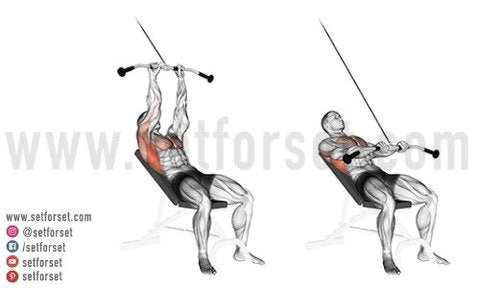
The cable pullover gives constant tension and is easy to adjust for lat bias. You can use a flat or incline bench.
- Set a straight bar on the lowest cable setting.
- Lie on a bench facing away from the stack with arms extended overhead.
- Keeping arms mostly straight, pull the bar down toward hips under control.
2. Barbell pullovers

Barbell pullovers can increase the lat stretch and change the feel of the movement. Use control and avoid forcing depth.
- Grip slightly wider than shoulders.
- Lower behind the head under control.
- Pull back to start with lats, not momentum.
3. Kettlebell pullovers

The kettlebell’s center of mass can make the pullover feel smoother. We like this on the floor for extra rib and spine control.
- Lie on the floor, hold KB above chest.
- Lower overhead under control without rib flare.
- Return smoothly to start.
4. Stability ball pullovers

This adds a core stability challenge. Start with shoulders on the ball first before trying to place more of your body on it.
- Set upper back on the ball, feet planted, hips up.
- Lower weight overhead slowly, keep torso stable.
- Return under control.
Dumbbell Pullover Programming Tips
The pullover is one of those lifts where your shoulders and torso will tell you immediately if you are ready. Start light, test your range of motion, then build from there.
- Strength focus: 3 sets of 6 to 8 reps, moderate-heavy but controlled.
- Hypertrophy focus: 3 sets of 8 to 12 reps, slow lowering, strong stretch.
- Endurance or loaded stretch: 3 sets of 15 to 20 reps with a lighter weight and strict form.
- Try it on chest day, back day, or as part of a push-pull superset.
Sample Dumbbell Pullover Workout
Here is a simple upper-body session that uses pullovers as a lat and chest finisher:
- Cable Face Pulls: 2x20
- Close Grip Lat Pull Downs: 3x10
- DB Lat Pullovers: 3x8
- Chest-Supported Rows: 3x8
- Superset: Chin-Ups & DB Chest Pullovers
- Chin-Ups: 2xfail
- DB Chest Pullovers: 2x10 - Superset: Inverted Rows & Push-Ups
- 2xfail for each move
How to Perform Dumbbell Pullovers at Home
No bench? No problem. A sturdy chair or stable stool can work (you will be closer to the perpendicular setup), or you can do pullovers on the floor as a more controlled range-of-motion option.
If you want a full home setup plan, add them to your at-home workout routine and keep the reps smooth and controlled.
Is the Dumbbell Pullover Essential to Your Workout Routine?
Outside of the big compound lifts, no single exercise is truly essential. But the dumbbell pullover earns its spot as a high-value accessory. It can add upper-body size, reinforce overhead control, and improve how your chest and lats feel under stretch.
If nothing else, use it as a controlled loaded stretch with a lighter weight and strict tempo. If your goal is more chest and lat mass, program it consistently for 6 to 10 weeks and let the results do the talking.
Related: 13 Dumbbell Chest Exercises - No Bench Needed

Prepare to maximize your gains with our exclusive 12-week hypertrophy training program. Choose between a 4 or 5 day training split and gain 2-12 pounds of muscle over 90 days...
0 comments