


Looking for the best dumbbell shoulder exercises to build size and strength? You're in the right place.
If you’re not using dumbbells in your shoulder workout, you should be. Barbells are great for moving heavy weight, but dumbbells offer unique benefits. They force each arm to work independently, increase muscle activation, and allow you to train each delt head more effectively.
Take Your Fitness To The Next Level


Below, we break down the 7 best dumbbell shoulder exercises to build broad, muscular shoulders. You’ll also get a complete shoulder workout, warm-up routine, programming tips, and answers to common shoulder-training questions.
Quick Answer: The best dumbbell shoulder exercises are the dumbbell push press, seated dumbbell shoulder press, half-kneeling shoulder press, Z-press, Arnold press, leaning dumbbell lateral raise, and one-arm bent-over rear delt raise. For a complete shoulder workout, include one overhead press, one lateral raise, and one rear-delt movement.
Table of Contents:
- Best Dumbbell Shoulder Workout
- Shoulder Muscle Anatomy
- 7 Best Dumbbell Shoulder Exercises
- Dumbbells vs Barbells vs Cables
- Shoulder Warm Up Routine
- Benefits of Shoulder Training
- FAQs
The 7 best dumbbell shoulder exercises are:
- Dumbbell Push Press
- Seated Dumbbell Shoulder Press
- Half-Kneeling Shoulder Press
- Z-Press
- Arnold Press
- Leaning Dumbbell Lateral Raise
- One-Arm Bent-Over Dumbbell Rear Delt Raise
Anatomy of the Shoulders (Deltoids)
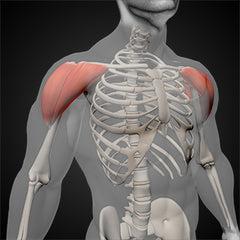
The shoulder muscle, known as the deltoids, is not a single muscle. It is made up of three heads:
- Anterior delt, also known as the front delt
- Middle delt, also known as the lateral delt
- Posterior delt, also known as the rear delt
These three muscle heads sit over the shoulder joint and help move the arm in multiple directions. The shoulder is the most mobile joint in the body, which is great for movement but also means it needs strong, balanced muscles for stability.
Most lifters already hit the front delts hard through pressing exercises. The side and rear delts usually need more direct attention if you want wider, rounder, better-developed shoulders.
Shoulder Functions & Movements
The shoulder is a shallow ball-and-socket joint that can move in multiple directions. This is why it’s important to strengthen the deltoids from multiple angles for both size and joint stability.
Here are the main movements for the deltoids:
|
Shoulder Movement |
Deltoid Muscle |
Exercise Example |
|
Shoulder Extension |
Posterior |
Dumbbell Pullover |
|
Shoulder Flexion |
Anterior |
Front Raise |
|
Shoulder Abduction |
Middle |
Lateral Raise |
|
Shoulder Adduction |
Posterior |
Chin Up |
|
Shoulder Horizontal Abduction |
Middle & Posterior |
Bent-Over Reverse Fly |
|
Circumduction |
All Three |
CARS (Controlled Articular Rotations) |
Benefits Of Training The Shoulders With Dumbbells
Besides the obvious vanity benefit of building bigger 3D shoulders, dumbbell shoulder training has important performance and joint-health benefits.
The 4 biggest benefits of training your shoulders with dumbbells are:
- Improved posture
- Better shoulder stability
- Improved athletic performance
- Better performance on compound lifts
1) Improved Posture
Strengthening the shoulders helps improve posture and counter the rounded-forward position that comes from sitting too much, typing, driving, and staring at your phone.
Looking for a great way to strengthen them while improving joint range of motion? Give the dead hang a go!
2) Better Shoulder Stability/Injury Resilience
The shoulder joint is highly mobile, but that mobility comes with a tradeoff: it needs muscular stability. Strengthening the muscles around the shoulder joint can improve control and reduce your injury risk.
3) Improved Performance
The shoulders play a major role in vertical presses, horizontal presses, rows, chin-ups, and pull-ups. In many exercises, they help stabilize the joint so the larger muscles can do their job.
Improving shoulder strength can carry over to sports, lifting, and daily life. You are only as strong as your weakest link.
4) Better Big 3
You need shoulder mobility and shoulder stability to perform the squat, deadlift, and bench. Balanced shoulder training that hits all three deltoid heads can improve shoulder stability and support performance on the big lifts.
The 7 Best Dumbbell Exercises For Shoulders
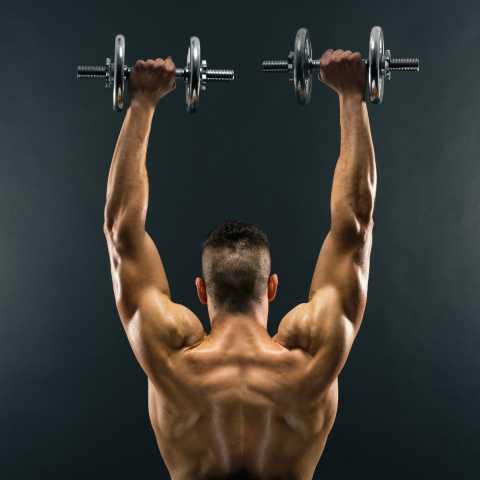
Now that you have a better idea of how the shoulders work, we can go over the best dumbbell exercises to train them.
You'll notice we’ve included multiple overhead press variations. Research shows that dumbbell overhead press variations do a great job activating the delts, particularly the front shoulders.¹
The 7 best dumbbell shoulder exercises are:
- Dumbbell Push Press
- Seated Dumbbell Shoulder Press
- Half-Kneeling Shoulder Press
- Z-Press
- Arnold Press
- Leaning Dumbbell Lateral Raise
- One-Arm Bent-Over Dumbbell Rear Delt Raise
Let's go over each.
1. Dumbbell Push Press
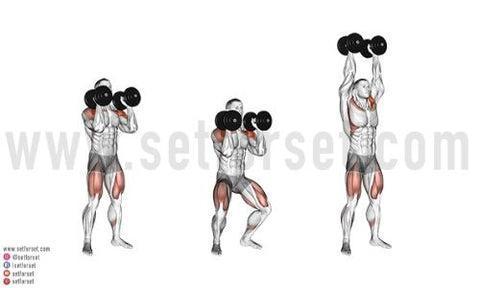
The dumbbell push press uses a lower-body dip, similar to a quarter squat, to help drive the dumbbells overhead. This lets you move more weight than a strict press while still hammering the shoulders.
Push presses also use triple extension through the ankles, knees, and hips, which makes them useful for athletes. Bigger shoulders and more explosive power? Not a bad two-for-one deal.
As with most overhead pressing variations, the dumbbell push press trains all three deltoid heads, with the front delts doing most of the heavy lifting.
How to do Dumbbell Push Presses:
- With your feet shoulder width apart, clean two dumbbells to the top of your shoulders and assume an upright torso.
- Dip down 4-6 inches, keeping your knees over your toes, then use your legs to help press the dumbbells overhead.
- The dip to press should be one seamless movement, not two separate ones.
- Lock out the dumbbells overhead, slowly lower them, reset, and repeat.
2. Seated Dumbbell Shoulder Press
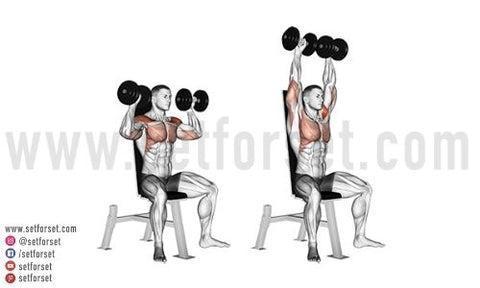
The seated dumbbell shoulder press is an essential exercise in our shoulder workout routine. It can be performed seated or standing, but the seated version reduces leg drive and makes it harder to cheat the movement.
This exercise can be varied by changing grip width, elbow angle, and rotation. You can learn more about how these variations compare in our article on the Arnold press vs shoulder press.
For this workout, use a standard to slightly wide pressing angle. Like most overhead presses, this trains all three deltoids, including the rear delts, which help stabilize the weight overhead.
How to do Seated Dumbbell Shoulder Presses:
- Clean the dumbbells so they are sitting on your shoulders and sit upright on an incline bench.
- Puff your chest out, brace your core, and find your preferred pressing angle.
- Press both dumbbells overhead until your elbows lock out.
- Slowly lower the dumbbells back down to your shoulders, reset, and repeat.
3. Half-Kneeling Shoulder Press
The half-kneeling shoulder press is a unilateral overhead press done while kneeling on one knee. Since you press one side at a time, your core and shoulder stabilizers must work harder to keep your body locked in.
We like performing this exercise with a neutral grip and slightly lighter weight. It feels good on the shoulders and adds useful variation to your pressing work.
How to do Half-Kneeling Shoulder Press:
- Kneel on one knee, with the opposite foot flat on the ground.
- Hold a dumbbell in one hand using a neutral grip, with your palm facing your body.
- Bring the dumbbell up to your shoulder with your elbow in front of your body.
- Brace your core and press the dumbbell overhead.
- You can place your other arm wherever you like, but lifting it out to your side can help with balance.
- Lower the weight back to shoulder height.
- Repeat for the desired reps, then switch sides.
4. Dumbbell Z-Press
The Z-Press is one of our favorite shoulder exercises. Its unique setup can help build strong shoulder stability, improve upper-back position, and expose mobility limitations fast.
You perform this movement sitting on the ground with your legs out in front of your body. Keeping your torso upright places demand on your core, upper back, and mobility.
When you first perform this exercise, be ready to be humbled. The limiting factor for most people is not strength. It is mobility and positioning. Start light.
Here’s a video of a barbell Z-Press. The dumbbell version is performed the same way except using dumbbells.
How to do Dumbbell Z-Press:
- Sit on the ground with your legs straight out in front. Do not bend your legs.
- Grab your dumbbells and bring them up to your shoulders.
- Sit up tall with a vertical torso and shoulders pulled back.
- Keep your chest out and press the dumbbells overhead.
- Do not let your back round. Fully extend your arms overhead and keep the weights stacked over your body.
5. Arnold Press
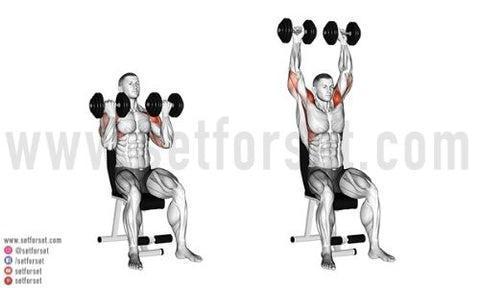
The dumbbell Arnold press is named after Arnold Schwarzenegger. If you want to train like him, check out his Arnold training split.
Because of the rotation and larger range of motion, the Arnold press increases time under tension for the delts. Since you press through multiple planes of motion, it can hit more shoulder fibers than a basic press. Performed for higher reps, it is an absolute shoulder burner.
How to perform Arnold Presses:
- In a seated position on an upright incline bench, kick the dumbbells up and rotate your hands until your palms are facing your shoulders.
- In one motion, press the dumbbells and rotate your palms to face forward.
- Lift until your biceps are by or slightly behind your ears.
- Pause, reverse the movement slowly, reset, and repeat.
6. Leaning Dumbbell Lateral Raises
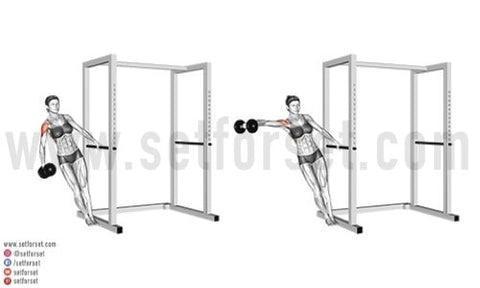
The leaning dumbbell lateral raise increases range of motion and can create a stronger contraction in the lateral delt. That makes it one of the best dumbbell exercises for building shoulder width.
Performing lateral raises unilaterally can also help reduce strength imbalances between sides. In addition, research suggests lateral raises can produce high activation in the front and side delts compared to other movements like bench press and dumbbell flys.²
How to do Leaning DB Lateral Raises:
- Hold a power rack or pole with one hand and bring your feet close to the rack.
- With the dumbbell resting on your outer thigh, raise the dumbbell away until you feel a strong contraction in your lateral deltoid.
- Slowly lower down and repeat for reps.
- Repeat on the other side.
7. One-Arm Bent-Over Dumbbell Rear Delt Raise
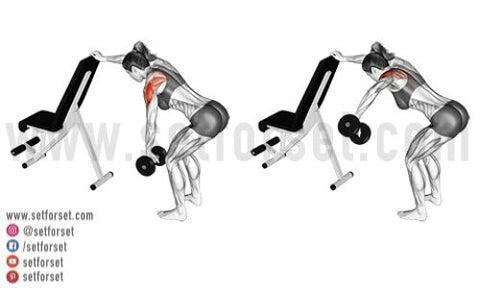
The one-arm bent-over rear delt raise, also known as a reverse fly, is a great rear delt exercise that also trains the upper back.
Holding onto a squat rack or sturdy surface gives you more stability, which can help you use better control and potentially more load. It also helps correct muscle imbalances between sides.
The video below doesn't use a bench for stability, but you'll be able to see the range of motion you should be using.
How to perform the Stability One-Arm Bent-Over Rear Delt Raise:
- Stand side-on to a squat rack or something sturdy while holding a dumbbell in the opposite hand.
- Hold the squat rack and hinge at the hips, keeping your shoulders down and chest up.
- With a slight bend in the working elbow, perform a rear delt raise until you feel a contraction in your upper back and shoulder.
- Return to the starting position and repeat.
- Perform the same sequence on the other side.
Shoulder Exercises With Dumbbells: Honorable Mentions
We just highlighted the best of the best for your dumbbell shoulder workout, but there are plenty of other effective dumbbell shoulder exercises.
After running the workout below for 8-12 weeks, you can keep the same general format and swap in new exercises for variety.
Additional muscle-building dumbbell shoulder exercises include:
- Kneeling Shoulder Press
- Internal & External Dumbbell Shoulder Rotation
- Dumbbell Front Raise
- Dumbbell Lateral to Front Raise
- Dumbbell Halo
- Dumbbell Upright Row
Interested in adding the front raise to your routine? Check out our Front Raise Exercise Guide!
The Ultimate Dumbbell Shoulder Workout
Now let’s turn these exercises into a real workout.
For this dumbbell shoulder program, you will perform 3 supersets, which means you perform two exercises back to back without rest.
Aim for 90-120 seconds of rest between supersets. If you need more rest, take it. Sufficient recovery helps you maintain better load and performance across the full workout.
When training shoulders with dumbbells, increased stability can help drive more engagement to the shoulder and less to the stabilizing muscles that simply keep you upright. This is why many exercises in this routine are seated or performed while holding onto something stable.
Where possible, slow down the eccentric, or downward motion, to create more muscle-building tension.
Shoulder Workout With Dumbbells
You can perform this workout once or twice per week. Rest 90-120 seconds between each superset.
Superset 1:
- Push Press: 3x6-8 reps
- Leaning Away Lateral Raise: 3x12-15 reps/side
Superset 2:
- Seated Shoulder Press: 3 sets x 8-10 reps
- Stability Bent-Over Rear Delt Raise: 3 sets x 12-15 reps/side
Superset 3:
- Z-Press: 3 sets x 8-10 reps
- Half Kneeling Shoulder Press: 3 sets x 10-12 reps/side
Looking for an easy way to save this workout for later? Screenshot the image below on your phone, and you've got an easy way to reference it when you hit the gym!
About This Workout & Programming Tips
The primary focus of this program is hypertrophy, not maximal strength. Dumbbells can absolutely build strength, especially for beginners, but advanced lifters may still want to include heavy barbell pressing if maximal strength is the main goal.
The key things to know about this dumbbell shoulder workout are:
- Focuses on muscle hypertrophy
- Uses moderate to heavy loads
- Uses moderate sets, generally between 2 and 4
- Sticks with rep ranges between 8 and 15 or more
- Uses supersets to increase intensity and fatigue
- Hits the delts from a wide range of angles
- Uses moderate rest between sets, around 90-120 seconds
The exercises in the workout above include compound movements and isolation exercises, which is a strong combination for shoulder hypertrophy.
Other Considerations When Training Your Shoulders
You don’t always need to train shoulders on their own. Shoulder training can fit into several different training days, including:
- Push day
- Upper body day
- Full body day
- Shoulder & arm day
That said, there are three shoulder movement categories we would include every week:
- 1 overhead pressing movement
- 1 lateral raise exercise
- 1 rear-delt targeted exercise
As long as you train these consistently, you’ll be hitting every head of the shoulder muscle group.
Dumbbells vs Barbells vs Cables For Shoulder Training
Dumbbells, barbells, and cables can all build strong shoulders, but each tool has its own advantages.
| Training Tool | Best For |
| Dumbbells | Balanced development, unilateral training, natural range of motion |
| Barbells | Heavy loading and maximal strength |
| Cables | Constant tension and isolation work |
Best approach: Use dumbbells as a core shoulder-building tool, then add barbells for heavy strength work and cables for isolation or higher-rep finishing work.
How to Warm Up The Shoulders Before Working Out
It’s important to get blood moving through the shoulder region before training. A good warm-up helps prepare the joint, improve mobility, and reduce injury risk.
A few shoulder circles are not enough. You want low-intensity movements that prepare the shoulders, upper back, and thoracic spine for pressing and raising.
Dumbbell Shoulder Workout Warm-Up Routine
Do about 5-10 reps for each movement, both sides or directions where it applies.
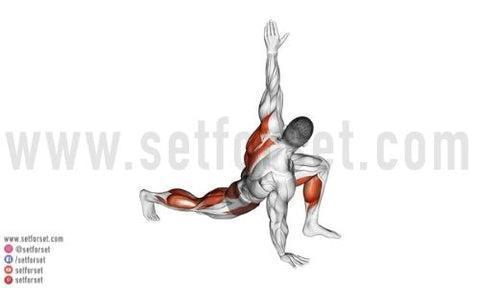
1) Spiderman With Rotation:
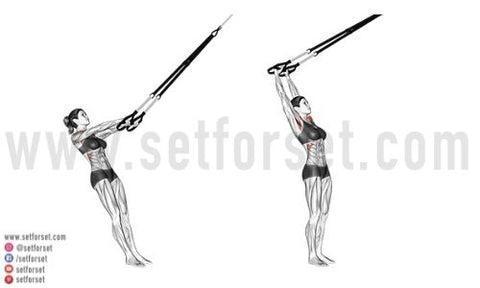
2) TRX I-Y-T:
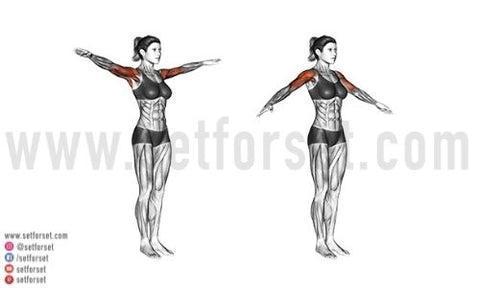
3) Arm Circles:
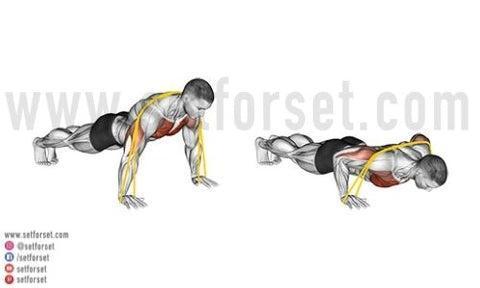
4) Push Ups:
FAQs About Dumbbell Shoulder Workouts
What is the best dumbbell shoulder exercise?
The seated dumbbell shoulder press is the best overall dumbbell shoulder exercise for building size and strength because it allows progressive overload while reducing lower-body momentum.
Can you build shoulders with only dumbbells?
Yes. Dumbbells are more than enough to build bigger shoulders as long as you train all three delt heads, use progressive overload, and stay consistent.
How many dumbbell shoulder exercises should I do?
Most lifters should do 3-5 shoulder exercises per workout. A simple setup is one overhead press, one lateral raise, and one rear delt exercise.
How often should I train shoulders?
Most people do well training shoulders 1-2 times per week, depending on their overall program and recovery.
Are dumbbells better than barbells for shoulders?
Dumbbells are better for natural range of motion, muscle balance, and unilateral training. Barbells are better for maximal loading. Both can be useful.
Continue Progressing Your Shoulder Workouts With Dumbbells
If you're ready for variety after performing this routine for 8 to 12 weeks, try pairing your shoulders with a large muscle group and following a strength and hypertrophy-based circuit routine.
You can do this by following a split that has a back and shoulder workout, or by combining your biceps, triceps, and shoulders into one killer arm routine. You have plenty of great options, so pick one and grab those dumbbells.
Interested in more great shoulder routines? Check out our Back And Shoulders Workout or this Ultimate Shoulder Workout Routine! You can also give your entire arm some extra attention with these Dumbbell Arm Exercises.
BEST HYPERTROPHY PROGRAM
Prepare to maximize your gains with our exclusive 12-week hypertrophy training program. Choose between a 4 or 5 day training split and gain 2-12 pounds of muscle over 90 days...
References:
- Dicus JR, Holmstrup ME, Shuler KT, Rice TT, Raybuck SD, Siddons CA. Stability of Resistance Training Implement alters EMG Activity during the Overhead Press. International Journal of Exercise Science. 2018;11(1):708-716. https://pubmed.ncbi.nlm.nih.gov/29997723/
- Campos YAC, Vianna JM, Guimarães MP, et al. Different Shoulder Exercises Affect the Activation of Deltoid Portions in Resistance-Trained Individuals. Journal of Human Kinetics. 2020;75(1):5-14. https://pubmed.ncbi.nlm.nih.gov/33312291/
0 comments