


Poor posture is often blamed on sitting, phones, weak muscles, or bad workout habits. The reality is more nuanced. There is no single "perfect" posture, and posture by itself does not reliably predict whether someone will develop pain or injury.
That said, spending long periods in the same position can leave you feeling stiff, and some people do benefit from improving upper-back strength, shoulder mobility, thoracic control, and general movement variety.
In this guide, we'll show you three steel mace exercises that can help train those qualities. These movements are not a guaranteed "fix" for posture, but they can be useful tools for improving strength, mobility, and body awareness.

Can You Improve Your Posture?
Yes, posture can change. Exercise programs that emphasize strengthening, shoulder control, and movement practice have been shown to improve forward-head posture, rounded shoulders, and thoracic alignment in some people.
However, the goal should not be to hold yourself rigidly in one "correct" position all day. A better target is to become comfortable and strong in multiple positions while avoiding long periods of inactivity.
The three exercises below use one of our favorite training tools, the steel mace.

Posture At A Glance
| Question | What To Know |
| Is there one perfect posture? | No. Comfortable posture varies between people and tasks. |
| Can exercise improve posture? | Yes, especially strengthening and targeted movement programs. |
| Does stretching fix posture? | Stretching alone appears less effective than strengthening. |
| Does poor posture always cause pain? | No. Posture and pain are related in some cases, but the relationship is not simple or universal. |
| What matters most? | Strength, movement variety, comfort, mobility where needed, and avoiding prolonged static positions. |
What Is Good Posture?
Good posture is better thought of as a position that is comfortable, efficient, and appropriate for the task you are doing.
You do not need to force your shoulders back, brace your abs all day, or maintain military-style posture from morning to night. The human body is built to move between positions.
A useful posture should allow you to breathe normally, move efficiently, and avoid unnecessary strain.
Here is a traditional illustration of good posture vs. poor posture:

Why Does Posture Matter?
Posture can influence how forces are distributed through the body, how comfortable a position feels, and how efficiently you perform certain movements. But it is only one piece of the puzzle.
Strength, mobility, training load, sleep, stress, injury history, and how long you stay in one position can all matter as much or more.
Some people with forward-head posture or rounded shoulders experience neck or shoulder pain, while others with similar posture have no symptoms at all.
That is why posture should not be treated as a diagnosis by itself.
If you do have discomfort, building strength and changing positions more often may help. Persistent or severe pain, numbness, weakness, or symptoms after an injury should be evaluated by a qualified healthcare professional.
What Causes Forward Head Posture And Rounded Shoulders?
Posture develops from a combination of anatomy, habits, training, work demands, fatigue, injury history, and individual movement preferences.
Long periods of sitting or looking down at a phone may contribute to temporary stiffness or habitual positions, but they do not automatically damage your spine.
Common contributing factors may include:
- Spending many hours in the same position
- Limited upper-back or shoulder strength
- Reduced thoracic mobility
- Training that heavily favors pressing over pulling
- Pain or protective muscle guarding
- Fatigue
- Workstation setup
- Individual anatomy
So-called "tech neck" or forward-head posture is common, but the solution is not simply "sit straighter."
A stronger approach is to improve movement capacity, train the muscles around the shoulders and upper back, and change positions throughout the day.
Can Exercise Improve Rounded Shoulders?
Yes. Recent systematic reviews suggest that strengthening and comprehensive exercise programs can improve forward-head posture, rounded shoulders, and thoracic kyphosis in many participants.
Importantly, strengthening appears to have more support than stretching alone for changing posture.
A practical program may include:
- Upper-back strengthening
- Rear-delt work
- Scapular control
- Thoracic-spine movement
- Shoulder mobility
- Core and trunk strength
- Regular breaks from prolonged sitting
For more lower-back strength work, see our guide to erector spinae exercises.

Why Use A Steel Mace For Posture Training?
The steel mace has a long handle with most of its mass concentrated at one end. That offset design creates leverage that can make relatively light loads feel challenging.
Depending on the exercise, mace training can challenge:
- Core strength and stability
- Shoulder control
- Thoracic-spine mobility
- Scapular stability
- Grip strength
- Coordination
- Body awareness
These qualities can support more comfortable and controlled movement, but the mace is not uniquely capable of "correcting" posture. Rows, rear-delt exercises, carries, mobility work, and other resistance exercises can be effective too.
What makes the mace useful is the combination of leverage, rotational movement, and the need to control an offset load.
When swinging the mace, the offset head creates momentum that you must control with your shoulders, upper back, grip, and trunk.
3 Steel Mace Exercises For Better Posture And Upper-Body Mobility
These exercises can help build shoulder mobility, upper-back strength, trunk control, and awareness of your upper-body position.
They should feel controlled and comfortable. None should produce sharp pain, numbness, tingling, or joint pinching.
1. Pendulum Stretch

The pendulum stretch is the simplest of the three movements. It places the shoulders into an overhead position while the mace provides gentle leverage.
How to do it:
- Stand with your feet about hip-to-shoulder width apart and keep your spine comfortable.
- Hold the mace vertically in front of you with both hands near the middle of the handle.
- Carefully bring the mace behind your back so the head points toward the floor.
- Gradually slide your hands farther toward the end of the handle only as far as your shoulders comfortably allow.
- Hold the position for 20-30 seconds while breathing normally.
- Walk your hands back toward the middle before returning the mace to the front.
- Repeat for 2-4 sets.
Switch which hand is on top between sets.
Why it may help: This stretch can expose the shoulders and lats to a larger range of motion. It may feel useful if your shoulders are stiff, but stretching by itself is unlikely to make a major long-term change in posture.
Think of it as mobility work that complements your strengthening exercises.
2. Pendulum Swing
This movement adds controlled motion to the position used in the pendulum stretch.
How to do it:
- Stand with your feet about hip-to-shoulder width apart.
- Bring the mace behind your back with both hands controlling the handle.
- Allow the mace to swing gently from side to side.
- Keep the movement smooth and stay within a comfortable shoulder range.
- Avoid forcing the mace lower behind your back just to create a bigger stretch.
- Perform 10-20 controlled repetitions.
- Bring the mace back to the front carefully before resting.
Switch your top hand between sets.
Why it may help: The pendulum swing adds movement, coordination, and low-level muscular control to the mobility work. The upper back, lats, shoulders, grip, and trunk all contribute to controlling the mace.
You do not need to perform eight sets every day, as the original version of this article recommended. Two to four sets a few times per week is a more practical starting point.
3. Steel Mace 360
The 360 is one of the signature steel mace exercises, but it has a larger learning curve than the pendulum variations.
Before attempting it, practice pendulums, pendulum swings, and these 360 practice moves.
How to do it:
- Hold the mace vertically in front of you with your hands stacked near your navel.
- Begin with your feet about hip-to-shoulder width apart.
- Guide the mace over one shoulder and allow the head to travel behind your body.
- Keep your ribs controlled and your elbows relatively close rather than flaring aggressively.
- As the mace reaches the opposite side, use your lats, arms, and momentum to guide it back to the starting position.
- Pause briefly, reset, and repeat.
Beginner tip: Choke up on the handle to reduce the leverage until you can control the movement consistently.
Why it may help: The 360 challenges shoulder motion, upper-back control, grip, and trunk stability through a large movement arc.
It may leave you feeling more upright or mobile immediately afterward, but that short-term sensation should not be confused with permanently "correcting" your posture in a single session.
Long-term changes come from repeated training, sufficient strength work, movement variety, and better daily habits.
Other Steel Mace Exercises That Can Support Posture
These movements can also be useful:
You can also explore our guide to steel mace exercises.
How Often Should You Do These Exercises?
You do not need to perform posture exercises every morning and every night to see progress.
A practical schedule is:
| Exercise | Frequency |
| Pendulum Stretch | 2-5 times per week |
| Pendulum Swing | 2-3 times per week |
| Steel Mace 360 | 2-3 times per week once technique is solid |
You can perform them as part of a warm-up, mobility session, or full steel mace workout depending on the exercise and your goals.
Tips For Improving Posture
1. Build A Balanced Training Program
Train your entire body rather than focusing only on posture drills.
Include pulling, pressing, squatting, hinging, carrying, core work, and appropriate mobility exercises. If you do a lot of pressing, make sure your program also includes sufficient upper-back and rear-shoulder work.
2. Change Positions Often
Instead of obsessing over maintaining one perfect posture, avoid staying in any single position for hours.
Stand up, walk, stretch, or change your workstation position periodically.
3. Make Your Standing Position Comfortable
A comfortable standing posture usually means:
- Feet placed naturally
- Knees relaxed rather than locked
- Weight distributed comfortably
- Shoulders relaxed
- Head in a position that does not require constant muscular effort
You do not need to constantly pull your shoulders backward or suck your stomach in.
4. Set Up Your Sitting Position For Comfort
- Keep your feet supported.
- Use a chair height that allows your hips and knees to remain comfortable.
- Support your lower back if that feels better.
- Keep frequently used items within easy reach.
- Position your screen so you do not have to crane your neck for long periods.
- Change positions and stand up periodically.
The best sitting posture is often your next posture.
5. Don't Overthink Sleeping Posture
There is no universally perfect sleeping position or mattress firmness.
Choose a position and pillow setup that lets you sleep comfortably and wake without significant pain. Quality sleep is more important than forcing yourself into a specific posture all night.
Read more about the importance of sleep.
Frequently Asked Questions
Can poor posture be corrected?
Posture can change, and exercise programs can improve forward-head posture, rounded shoulders, and thoracic alignment in some people. The goal should be better movement and comfort rather than achieving one perfect posture.
Do rounded shoulders cause pain?
Not necessarily. Some people with rounded shoulders experience pain while others do not. Pain is influenced by many factors beyond posture alone.
What muscles should you strengthen for better posture?
Upper-back muscles, rear delts, rotator cuff muscles, trunk muscles, and lower-body strength can all contribute to better movement control. A balanced full-body program is usually more useful than isolating one "posture muscle."
Is stretching enough to fix posture?
Probably not. Recent evidence suggests strengthening has a greater effect on postural alignment than stretching alone.
Can a steel mace fix rounded shoulders?
A steel mace can help train shoulder mobility, upper-back strength, trunk control, and coordination, but it is not a guaranteed cure for rounded shoulders.
Is the steel mace 360 good for posture?
The 360 can be useful for shoulder mobility, upper-back strength, grip, and trunk control when performed correctly. Its effect on posture will depend on your broader training program and habits.
Final Thoughts
Posture is more complicated than simply standing up straight.
If you feel stiff or spend much of your day sitting, building upper-back strength, improving shoulder mobility, and moving more often can be worthwhile. The steel mace provides a unique way to train those qualities through leverage and rotational movement.
The pendulum stretch, pendulum swing, and 360 are three useful options, but they should be part of a balanced training program rather than treated as a guaranteed posture cure.
Focus on getting stronger, moving through comfortable ranges of motion, changing positions regularly, and practicing movements you can control.
Where To Buy A Steel Mace
You can buy a steel mace from SET FOR SET.
For mobility and posture-focused exercises, a 7 lb or 10 lb mace is a practical starting point for many people.
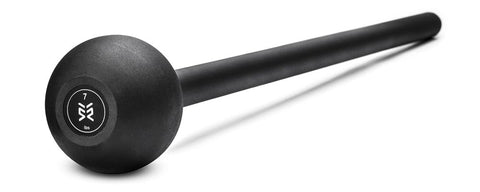
Not sure what weight you need? Read our guide: What size steel mace should I get?
#AlwaysReady,
SET FOR SET
References
- Sepehri, S., Sheikhhoseini, R., Piri, H., & Sayyadi, P. (2024). The effect of various therapeutic exercises on forward head posture, rounded shoulder, and hyperkyphosis among people with upper crossed syndrome: A systematic review and meta-analysis. BMC Musculoskeletal Disorders, 25, 105.
- Warneke, K., Lohmann, L. H., & Wilke, J. (2024). Effects of stretching or strengthening exercise on spinal and lumbopelvic posture: A systematic review with meta-analysis. Sports Medicine - Open, 10, 65.
- Almeida, G. P. L., et al. (2024). The effect of exercise on postural alignment: A systematic review.
0 comments