


Finding a bodyweight workout plan that actually builds muscle is harder than it should be.
Most programs fall into one of three traps. They are too advanced for beginners, too basic to work past the first couple of weeks, or just a random collection of exercises with no real progression.
This plan is different.
This is a structured 8-week bodyweight workout plan designed for muscle growth. You will use progressive overload, targeted rep ranges, and smarter exercise variations so your training keeps working as you get stronger.
In other words, this works like a real lifting program, just without the weights.
Quick Answer
If you want to build muscle with bodyweight training, you need the same ingredients as any good lifting plan: challenging sets, progressive overload, enough weekly volume, and recovery. This program uses a 4-day upper and lower split so you can train hard, recover well, and steadily level up your push ups, pulls, dips, and leg work across 8 weeks.
| Key Takeaways | What to do |
| Train 4 days per week | Upper 2 days, Lower 2 days, with 3 rest days |
| Use progressive overload | Increase reps to the top of the range, then switch to a harder variation |
| Make sets challenging | Most working sets should finish 0-2 reps shy of failure |
| Rest enough | 60-90s on most moves, up to 2-3 min on hard pull ups and dips |
| Track your work | Write down reps for every set so you can beat it next week |
Table of Contents:
- The split you'll be using for this 8-week bodyweight workout plan
- Your 8-week bodyweight workout routine
- Important lessons on bodyweight training
- How to run this bodyweight workout plan effectively for muscle growth
- How to perform the bodyweight exercises in this 8-week program
- Benefits of bodyweight training

The Best 8-Week Bodyweight Workout Plan
This 8-week bodyweight workout plan is built specifically for muscle growth (hypertrophy) using progressive overload and structured training variables.
Before you jump into the routine, read the split and the progression rules below. That is what makes this plan work.
Who This Program Is For
- Beginners who want structure instead of random workouts
- Intermediate lifters training at home
- Anyone looking to build muscle without a gym
- Lifters who want a no-equipment plan that still uses real progression
Your Bodyweight Workout Split: 4-Day Upper Body and Lower Body
The best training split for most bodyweight-only lifters is a 4-day split where you train upper body twice per week and lower body twice per week.
Bodyweight training is naturally compound-heavy, which is great for building muscle. An upper lower split fits that reality and keeps your weekly workload balanced without needing a ton of isolation exercises.
Other splits can work too, like push pull legs or full body. But push pull legs often needs more exercise selection and can get messy if you train more than three days per week. A full body routine is excellent for staying in shape, but as you get stronger it becomes harder to keep enough quality volume for each muscle group without workouts turning into marathons.
From a coaching standpoint, four training days and three rest days per week is a strong sweet spot for muscle growth and recovery, even when you are only using bodyweight.
Suggested weekly schedule:
- Day 1: Upper Body Session 1
- Day 2: Lower Body Session 1
- Day 3: Rest
- Day 4: Upper Body Session 2
- Day 5: Lower Body Session 2
- Day 6-7: Rest
Note: You can move rest days around as needed. Just make sure you complete all 4 sessions each week.
Equipment and setup
- A pull up bar (door frame bar works)
- Dip bars or two sturdy chairs
- A bench, box, or stable surface for incline or decline push ups
- Optional: resistance bands for assistance on pull ups and dips
How hard should your sets be?
For muscle growth, most working sets should end 0-2 reps shy of failure. If you finish a set and feel like you could have done five more reps, it is time to make the variation harder or tighten your tempo.
Rest times
- Pull ups, chin ups, dips: 2-3 minutes if needed
- Push ups, rows, lunges, squats: 60-90 seconds
- Plyometrics: 60-120 seconds so you can stay explosive
Now, let's get into the 8-week bodyweight workout routine.
Week 1-4:
| Session 1 | Session 2 | Session 3 | Session 4 |
| Pull Up: 5x5-10 | Split Squat: 5x15-20 | Chin Up: 5x4-6 | Split Squat: 5x5-10 |
| Dip: 5x5-10 | Lateral Jump Lunges: 5x10-20 | Decline Push Up: 5x5-10 | Reverse Lunge: 50 reps in total |
| Push Up: 5x5-10 | Glute Bridge March: 50 reps total | Inverted Row (change grip): 5x5-10 | Air Squat: 5xAMAP |
| Inverted Row (alter grip as needed): 5xAMAP | Lunges: 50 reps total | Dip: 5x15-20 | Glute Bridge: 5xAMAP |
| Incline Push Up: 5xAMAP | Air Squat: 5xAMAP | Push Up: 5x15-20 | Calf Raise: 5xAMAP |
| Calf Raise: 5xAMAP | Leg Raises: 3x5-10 |
Note: AMAP = As many reps as possible
Week 5-8:
| Session 1 | Session 2 | Session 3 | Session 4 |
| Dip: 5x5-10+ | Jumping Lunge: 5x10-20 | Close Grip Chin Up: 5xAMAP | Jumping Lunge: 5x10-20 |
| Pull Ups: 5x5-10 | Jump Squat: 5x10-20 | Ballistic Push Up: 5x10-20 | Glute Bridge: 5xAMAP |
| Decline Push Up: 5x5-10 | Bulgarian Split Squat: 5xAMAP | Inverted Row (change grip): 5x15-20 | Jump Squat: 5x10 (AMAP on the last set) |
| Chin Up: 5x5-10+ | Stationary Reverse Lunge (same leg): 5xAMAP | Dip: 5xAMAP | Calf Raise: 5xAMAP |
| Incline Push Up: 5xAMAP | Glute Bridge: 5xAMAP | Close Grip Push Up: 5xAMAP | Squat: 5xAMAP |
| Inverted Row: 5xAMAP | Push Up: 5xAMAP | Leg Raises: 3x8-12 |
The Most Important Lesson About Bodyweight Training
One of the biggest misconceptions about bodyweight training is that it follows totally different rules than weight training. It does not.
Some people will tell you to do 300 push ups per day or train every day. That only works if the sets are not challenging anymore. At that point, you are basically doing endurance work.
Think of it like benching 30% of your 1RM for 300 reps every day. You might sweat, but it is not a great long-term plan for strength or muscle growth.
If you want to build muscle with bodyweight, you need challenging sets, progression over time, and recovery days so your body can adapt. This program is built around those exact principles.
How To Build Muscle With This 8-Week Bodyweight Workout Program
With weight training, progressive overload is usually as simple as adding weight while staying in a target rep range. With bodyweight training, the concept is the same, but the tools are different.
Yes, you can add reps. But reps alone can get slow and time-consuming if it is your only strategy. Instead, you will use multiple levers to keep the work hard and productive.
Progressive Overload for Bodyweight Training
Use these methods to keep progressing:
- Increase reps
- Use more challenging variations
- Alter tempo and intensity
- Decrease rest time
How to progress exercises with a rep range:
- Pick a variation that makes the prescribed rep range challenging (example: use band-assisted pull ups if you cannot hit the reps yet).
- When you can consistently hit the top end of the rep range with good form, move to a harder variation.
The goal is not to blow past the rep range forever. The goal is to keep the rep range challenging by increasing difficulty. If the plan calls for 5-10 reps, you should not be doing 25 reps just because you can.
How to progress AMAP sets: At first, try to increase reps. But if an AMAP set takes 1-2 minutes (or more) to reach failure, you should increase difficulty by slowing the tempo, using pauses, tightening form, or choosing a harder variation.
Intensity matters: If jump squats are getting easier, do not just chase endless reps. Squat deeper, jump higher, and land softly with control. Better reps beat more sloppy reps every time.
If you have advanced tools like a weighted vest or dip belt, you can also load pull ups, dips, and some push up variations. That said, this plan is written to work as bodyweight-only.

The Bodyweight Exercises You'll Be Doing
To make exercise selection simple, this plan is built around “exercise families” (push ups, pull ups, lunges, and so on). Each family has easier and harder options, so you can keep progressing without changing the structure of the program.
Note: You are not limited to the variations below, but stick to the same exercise family, sets, and reps for best results.
1. Push-Ups (Chest, Triceps, Shoulders)

Push ups are your primary horizontal push exercise, similar to how the bench press anchors many lifting programs.
Traditional push up setup: high plank, hands under shoulders, core braced, glutes tight. Lower with elbows at about a 45-degree angle. Touch chest to the floor, then press back up with control.
Incline Push-ups: Easier variation because you lift a smaller percentage of bodyweight. Use a stable surface 2-3 feet high. Keep your body in a straight line and lower under control.
Decline Push-ups: Harder variation because you lift more bodyweight. Elevate your feet on a stable surface. Keep your ribs down and avoid collapsing through the lower back.
Other Progressions And Variations On Push-ups:
- Wide-Grip Push-up: More chest emphasis due to reduced elbow bend.
- Narrow Grip Push-Up: More triceps emphasis due to increased elbow flexion.
- Side-to-Side Push-Ups: Shift your chest toward one hand each rep to increase load on one side.
- One Arm Raised: Elevate one hand to increase range and load on the working side.
- One Arm Stretched Out: Great bridge toward one-arm push ups by minimizing assistance.
- Pike Push Ups: One of the best bodyweight options for delts, mimicking an overhead press angle.
If you want a massive menu of options, here are 33 push up variations from beginner to advanced.
2. Dips (Triceps, Chest, Shoulders)

Dips are a high-value upper body push that hammers triceps, chest, and shoulders. They are usually harder than push ups, which makes them excellent for building muscle when you can do them safely.
Form: hands on parallel bars, arms locked out, shoulders down and back. Lower until your upper arms are about parallel to the floor, then press back up. Keep forearms as vertical as possible.
You can also do these with two sturdy chairs. Make sure they do not slip.
Other variations of dips include:
- Standing Dip: Assisted version that reduces load by using your legs.
- Side-To-Side: Shift toward one side for more unilateral emphasis.
More options here: 15 dip variations.
3. Chin-Ups (Back, Biceps, Forearms)

Chin ups use an underhand grip and generally involve more biceps. They are different enough from pull ups to deserve their own slot in a bodyweight program.
Setup: shoulder-width underhand grip, ribs down, core tight. Pull elbows down and back until your chin clears the bar, then lower under control.
The program also uses close grip chin ups, which are slightly easier for many people.
4. Pull-Ups (Back, Biceps, Forearms)

Pull ups are your foundational vertical pull. The overhand grip often biases the back differently than chin ups, and many lifters feel more lat involvement, especially with wider grips.
A couple advanced pull up variations are:
- To One Side: Pull toward one hand.
- Archer Pull-Up: Pull with one arm while the other arm stays extended for minimal assistance.
If you need progressions, read our pull up progression guide.
If you do not have a bar, here are our top choices for pull up bars.
5. Inverted Rows (Back, Biceps, Forearms)
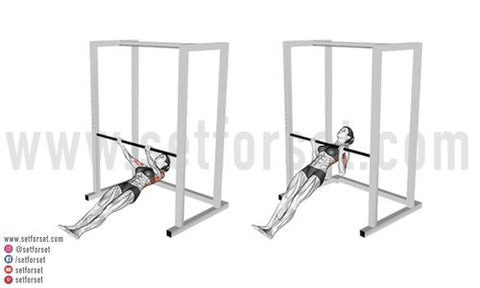
Inverted rows (also called Australian rows) are your horizontal pull, filling the role of a bent-over row in weight training.
Use an underhand or overhand grip. Make it harder by elevating your feet or lowering the bar. Make it easier by raising the bar or bending your knees.
6. Squat (Quads, Hamstrings, Glutes)

Bodyweight squats are the main lower body pattern. They can get easy fast, so this program uses them with high reps or later in the workout when fatigue is higher.
Form: feet about shoulder-width, sit hips back and down, keep chest tall, knees track over toes. Squat to at least parallel if your mobility allows, then stand up with control.
7. Lunges (Quads, Hamstrings, Glutes)

Lunges are a great bodyweight leg builder because they are unilateral-focused and challenge stability.
For higher rep prescriptions like “50 total reps,” treat it like a target. Complete the reps in as many sets as needed, then try to beat your total next week.
The program also includes:
- Reverse Lunge: Step backward instead of forward.
- Stationary Lunge: Stay in a split stance and repeat reps on the same leg.
More options here: lunge exercises.
8. Split Squat (Quads, Hamstrings, Glutes)

A split squat is basically a lunge where your feet never come back together. That makes it easier to focus on one side at a time and progress the movement with variations.
- Front Foot Raised: Elevate the front foot slightly to increase knee flexion and quad demand.
- Bulgarian Squat: Rear foot elevated on a bench. This is one of the hardest bodyweight leg moves for muscle growth. Learn it here: Bulgarian split squat.
9. Glute Bridge (Quads, Hamstrings, Glutes)

The posterior chain can be tricky to train without equipment. Glute bridges are one of the simplest, most effective options, which is why they appear twice per week.
Setup: knees bent, feet flat, shins near vertical. Brace core, drive through heels, extend hips fully, and squeeze glutes hard at the top. Lower under control.
Progressions:
- One-Legged Glute Bridge: Perform all reps on one leg for more load.
- Glute Bridge March: Hold the top position and alternate knee drives while staying locked in.
More options here: glute bridge exercises.
10. Calf Raises

Calf raises are straightforward. Use a step for a full stretch at the bottom and a strong squeeze at the top. Progress by slowing the tempo, pausing at the top, or moving to single leg reps.
11. Plyometrics And Ballistic Exercises

Plyometrics use explosive power. Focus on quality reps, crisp takeoffs, and soft landings.
- Jump Squat
- Jumping Lunges
- Lateral Jump Lunges
- Ballistic Push-Up
12. Core Exercises

The plan includes leg raises, but you can add more core work if you want. Many compound bodyweight movements also train the core (push ups are basically moving planks), so you might not need much extra.
Here are some of the best core exercises with progressions:
- Lying leg raises -> Hanging leg raises
- Crunches -> Decline Crunch
- Plank -> Plank with Knee Drive
- Side Plank -> Side Plank with Hip Dip
- Ab Rollout -> Plank Walkout
Advanced Bodyweight Workout Options:
- Pistol Squat
- Skater Squat
- Muscle Ups
- One-Arm Push-Up
These are not programmed in the 8-week plan above because they are more aligned with advanced calisthenics, but they are great long-term goals.
Top 3 Benefits Of Bodyweight Training
Bodyweight training has a lot going for it. Here are three big benefits:
- Convenience and consistency: You can train almost anywhere, which makes it easier to stick with.
- Muscle and strength with minimal equipment: Challenging compound movements can build real muscle when programmed correctly.
- Better athleticism and control: Bodyweight training improves coordination, stability, and strength through natural movement patterns.
Summary Of Your Bodyweight Workout Plan
Bodyweight training is legitimate resistance training when it is programmed the right way. That means structured sets, smart rep targets, rest periods, and basic progression over time.
The most important factor is progressive overload. Keep chasing harder variations, better reps, and more total quality work. Do that consistently for 8 weeks and you will build muscle and strength with this routine.
Related: 28 Days of Calisthenics (4-Week Challenge!)
Final Thoughts
This program works because it follows the same principles as effective weight training: progressive overload, sufficient volume, and recovery.
The only difference is the tool. Instead of adding weight, you are improving leverage, control, and total reps.
Stick with the plan, push your sets close to failure, and track your progress each week.
Do that, and you will build real muscle with bodyweight training.

Safety note: If you have pain (not normal training burn), joint issues, or a medical condition, talk with a qualified professional before starting a new program. Prioritize clean reps and controlled tempo over ego reps.
5 comments
@MICHAEL COOPER, really glad to read your comment. We have a “calisthenics workout plan” that would be a good next option. Hit our search bar up top and type in calisthenics or bodyweight plan and you’ll find it and others there. Thanks for being part of our circle!
I’m almost done with my eight weeks! Love this workout! Do you have another one for after this?
Oops! I have been doing them as a circuit! I really do enjoy the workout and think it is one of the most complete body weight workouts I have found. I am about to start the second 4 week phase and am excited for the new challenge. Just planning ahead, do you guys have a workout I can try for after I complete this one ?
Hi @Michael, Finish all the sets of one exercise before moving on to the next.
Do I do these as a circuit or finish all sets of one exercise before going on the the next?