


Tennis elbow and golfer's elbow are common overuse injuries that affect the tendons around the elbow. Tennis elbow, or lateral elbow tendinopathy, causes pain on the outside of the elbow. Golfer's elbow, or medial elbow tendinopathy, causes pain on the inside.
Despite the traditional names "lateral epicondylitis" and "medial epicondylitis," these conditions are not simply inflammatory problems. In persistent cases, the tendon often shows degenerative changes and reduced load tolerance, which is why modern rehabilitation focuses less on complete rest and more on gradually rebuilding strength and capacity.
This guide covers the differences between tennis elbow and golfer's elbow, common symptoms and causes, treatment options, and a complete series of forearm-strengthening exercises. We also show how a light steel mace can be used as an optional training tool once you can tolerate basic rehab exercises.
Important: This article is educational and is not a diagnosis or individualized rehabilitation plan. Elbow pain can come from several conditions, including nerve irritation, arthritis, ligament injuries, and referred pain from the neck or shoulder. Seek professional assessment if symptoms are severe, worsening, associated with numbness or weakness, or not improving.

Tennis Elbow vs Golfer's Elbow At A Glance
| Condition | Tennis Elbow | Golfer's Elbow |
| Medical Term | Lateral elbow tendinopathy / lateral epicondylitis | Medial elbow tendinopathy / medial epicondylitis |
| Pain Location | Outside of elbow | Inside of elbow |
| Commonly Irritated Tendons | Wrist extensor tendon complex | Wrist flexor-pronator tendon complex |
| Often Aggravated By | Gripping, lifting palm-down, wrist extension | Gripping, wrist flexion, forearm pronation |
| Typical Treatment | Load modification + progressive exercise | Load modification + progressive exercise |
What Is Tennis Elbow?
Tennis elbow, commonly called lateral epicondylitis, is pain and reduced load tolerance involving the tendons that attach near the lateral epicondyle on the outside of the elbow.
It is often associated with repetitive gripping and wrist-extension tasks. Tennis can cause it, but so can weight training, painting, carpentry, plumbing, cooking, gardening, computer work, and many other repetitive activities.

Common symptoms include:
- Pain or tenderness on the outside of the elbow
- Pain when gripping, twisting, lifting, or carrying
- Pain with resisted wrist extension
- Reduced grip strength because gripping hurts
- Aching that may extend into the upper forearm
What Is Golfer's Elbow?
Golfer's elbow, or medial epicondylitis, affects the tendon complex on the inside of the elbow. It is commonly aggravated by repeated gripping, wrist flexion, forearm pronation, and throwing or swinging activities.

Golfers can develop it, but so can baseball and softball players, climbers, wrestlers, weightlifters, tradespeople, and anyone performing repeated forearm-intensive work.
Common symptoms include:
- Pain or tenderness on the inside of the elbow
- Pain with gripping or making a fist
- Discomfort with wrist flexion or forearm pronation
- Reduced grip strength
- Occasional stiffness around the elbow
Are Tennis Elbow And Golfer's Elbow The Same?
No, but their management is similar.
Tennis elbow primarily involves the wrist-extensor side of the forearm, while golfer's elbow involves the wrist-flexor and pronator side. Both are usually managed with activity modification and progressive loading of the affected muscles and tendons.
You can also have symptoms on both sides of the same elbow, although another diagnosis should be considered when pain is widespread or unusual.

What Causes Tennis Elbow And Golfer's Elbow?
These conditions usually develop when the demand placed on the tendon exceeds its current capacity to recover and adapt.
That can happen when you:
- Suddenly increase training or work volume
- Perform a new repetitive gripping task
- Change racquets, clubs, tools, or lifting technique
- Increase weight or training frequency too quickly
- Return to activity after a long layoff
- Perform high volumes of gripping, wrist extension, wrist flexion, or throwing
They are often called overuse injuries, but "overuse" does not always mean you did too much exercise overall. Sometimes the tendon simply was not prepared for a particular type or amount of load.
How Is Tennis Elbow Diagnosed?
Diagnosis is usually based on your history, the location of your pain, and whether specific movements reproduce your symptoms. Imaging is not routinely required for a straightforward case.
A clinician may check:
- Tenderness over the lateral or medial epicondyle
- Pain with resisted wrist extension or flexion
- Pain with gripping
- Forearm strength
- Elbow and wrist range of motion
- Neck and nerve function when symptoms suggest another source
The self-tests in older versions of this article were presented too confidently. Pressing on the elbow or reproducing pain during a movement may suggest tendon involvement, but no single home test can confirm the diagnosis.
Get assessed if you have substantial weakness, numbness, tingling, locking, major swelling, a traumatic injury, or pain that is not improving as expected.
How Long Does Tennis Elbow Last?
Recovery varies considerably. Mild cases may improve over several weeks, while persistent tendinopathy can take several months. Some cases last a year or longer.
That does not mean the tendon needs to be completely pain-free before you use the arm. Modern tendon rehab usually involves finding a tolerable level of activity and gradually increasing load rather than waiting for all symptoms to disappear before exercising.
Can You Lift Weights With Tennis Elbow?
Often, yes. Complete cessation of all upper-body exercise is not automatically necessary.
Instead, modify movements based on symptoms. You may be able to:
- Reduce load
- Reduce gripping volume
- Use neutral-grip variations
- Use straps temporarily for pulling movements
- Choose machines that require less gripping
- Train through a smaller range of motion
- Temporarily avoid the exercise that most clearly aggravates symptoms
A mild, tolerable level of discomfort during tendon rehab is often acceptable if symptoms return to baseline within about 24 hours. Sharp or escalating pain is a sign to back off.
Lower-body training and cardiovascular exercise can usually continue if they do not aggravate the elbow.
Ice, Heat, NSAIDs, And Braces: What Actually Helps?
Ice
Ice may temporarily reduce pain after activity. It is a symptom-management tool, not a way to accelerate tendon healing. Use it if it feels helpful rather than because you believe swelling must be eliminated.
Heat
Heat may make a stiff forearm feel more comfortable before activity, but evidence that it speeds recovery is limited.
NSAIDs
Over-the-counter anti-inflammatory medications may provide short-term pain relief for some people. Because these medications can cause gastrointestinal, kidney, cardiovascular, or other side effects, follow the label and discuss them with a clinician or pharmacist if you have medical conditions, take other medications, or need them repeatedly.
Counterforce Brace Or Wrist Support
A brace may temporarily make gripping or work more comfortable for some people. It should not replace progressive rehabilitation.
Do You Need Physical Therapy?
Many cases improve with conservative care, but seeing a physical therapist can be useful from the beginning rather than only after home treatment fails.
A clinician can help confirm that your symptoms are actually tendon-related, identify aggravating loads, and build an individualized progression.
Consider professional evaluation sooner if:
- Pain is severe
- You have numbness or tingling
- You are losing strength quickly
- Symptoms followed a traumatic injury
- You cannot perform normal work or daily activities
- Symptoms are worsening rather than improving
- You have tried several weeks of sensible load modification without progress
What About PRP, Steroid Injections, And Shockwave Therapy?
These treatments are sometimes used when symptoms persist, but the evidence is mixed.
Corticosteroid injections can provide short-term pain relief, yet long-term outcomes are less impressive. PRP may perform better than corticosteroids at later follow-up in some studies, but the overall evidence quality remains inconsistent. Shockwave therapy has also produced mixed findings across reviews.
Because no single passive treatment consistently outperforms all others, progressive exercise and load management remain central parts of nonoperative care.
Surgery is uncommon and generally considered only after an extended period of persistent symptoms that have not responded to appropriate conservative management.
Why Strengthening Matters For Tennis And Golfer's Elbow
Tendons adapt to load. The goal of rehabilitation is to progressively increase the amount of force the wrist and forearm muscles can tolerate.
Research supports exercise therapy for lateral elbow tendinopathy, and eccentric wrist exercises are also commonly included in medial elbow rehabilitation. However, there is no single magical rep scheme or contraction type.
A good program gradually trains:
- Wrist extension
- Wrist flexion
- Forearm pronation and supination
- Radial and ulnar deviation
- Grip
- Eventually, sport- or job-specific movements
This is where a steel mace can become useful. It should be viewed as one optional progression tool, not the best or only rehab tool.
Using A Steel Mace For Elbow Rehabilitation
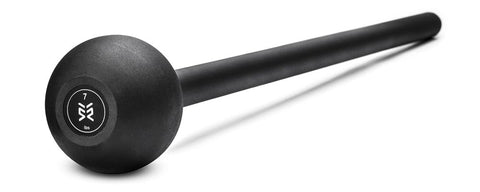
A light steel mace creates resistance through a long lever. Sliding your hand farther from the mace head gradually increases torque without changing the actual weight.
That can make it useful for progressing pronation, supination, wrist deviation, and other forearm movements.
A 7 lb steel mace is the lightest option shown in this article, but even that may be too challenging early in rehabilitation. A hammer, very light dumbbell, resistance band, or purpose-built rehab bar may be more appropriate when symptoms are irritable.
Tennis Elbow Exercises
The original demonstration video is below. Some of the more dynamic exercises shown should be treated as later-stage strengthening or prevention exercises rather than early-stage rehabilitation.
Tennis Elbow Anatomy
The forearm contains numerous small muscles that control the wrist, fingers, and rotation of the forearm. Several of these muscles share tendon attachments around the elbow.

Warm-Up And Mobility Exercises
You do not need an elaborate stretching routine before rehabilitation. A few minutes of comfortable wrist and forearm movement can help you assess symptoms and prepare for loading.
In the video above, Sam demonstrates simple wrist warm-up movements.
1. Wrist Flexor Mobility

Move slowly into a comfortable stretch through the wrist flexors. Do not force a deep stretch into pain.
Try: 1-2 sets of 8-12 controlled repetitions or a brief 20-30 second hold if comfortable.
2. Forearm Extensor Mobility

Use gentle pressure and stay within a tolerable range. More stretch is not automatically better for a painful tendon.
Try: 1-2 sets of 8-12 controlled repetitions.
Forearm Strengthening Exercises
These exercises progress from controlled wrist movements toward more dynamic mace exercises.
During rehabilitation, pain should guide the load. A small amount of discomfort may be acceptable, but pain should remain manageable and should not be substantially worse later that day or the following morning.
Begin with 2-3 sets rather than automatically performing four sets of every exercise. Most people only need a few exercises in one session.
1. Wrist Extension
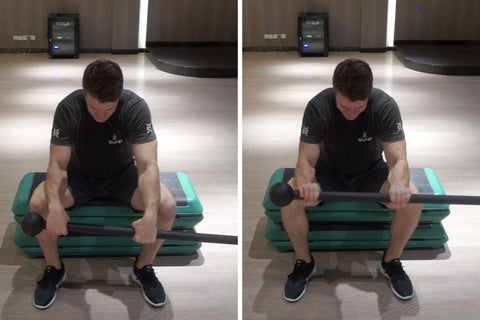
Support your forearm and slowly extend your wrist against resistance. The wrist extensors are particularly relevant for lateral elbow tendinopathy.
Start with: 2-3 sets of 10-15 controlled reps.
2. Wrist Flexion

With your palm facing up and forearm supported, flex the wrist slowly and control the lowering phase.
Start with: 2-3 sets of 10-15 reps.
3. Wrist Extension With Mace-Head Grip

This variation adds more grip demand. Introduce it after basic wrist extension is comfortable.
Difficulty: Intermediate
4. Radial Deviation

Move the wrist toward the thumb side while keeping the forearm relatively still. A long lever allows very small changes in hand position to noticeably change the difficulty.
Difficulty: Beginner to intermediate
5. Ulnar Deviation

Move the wrist toward the little-finger side under control.
Difficulty: Beginner to intermediate
6. Metronome

This is a more dynamic deviation exercise. Use it later in your progression when basic wrist movements are well tolerated.
Difficulty: Intermediate
7. One-Arm Pike

This creates a much longer lever and substantially more torque. It is not an early-stage rehab exercise.
Difficulty: Advanced
8. Supination And Pronation

Keep the elbow still and slowly rotate the forearm from palm-up toward palm-down and back. A hammer, dumbbell loaded on one end, or mace can all provide useful leverage.
Start with: 2-3 sets of 8-15 reps each direction.
9. Forward Pendulums

This adds momentum and requires more active control of torque. Save it for later in the progression.
Difficulty: Intermediate
10. Goblet Grabs

Goblet grabs challenge grip and finger strength. Because catching or rapidly repositioning an implement is more demanding than basic grip work, use this only when normal gripping is comfortable.
Difficulty: Intermediate to advanced
11. Wrist Rolls

Wrist rolls train the flexors and extensors continuously. Keep the movement controlled rather than chasing fatigue.
12. Front Raise And Pause

A straight-arm front raise creates considerable demand on the wrist extensors and grip. This is best treated as a late-stage strengthening or prevention exercise rather than early rehab.
Advanced Return-To-Sport Mace Exercises
Once basic gripping, wrist loading, and rotational work are comfortable, you can gradually return to more dynamic movements:
Eventually, advanced mace users may progress to single-arm swings. These exercises are not required to recover from tennis elbow or golfer's elbow.
Sample Tennis Elbow Strengthening Workout
This is a more conservative starting template than the original high-volume workout:
| Exercise | Sets x Reps |
| Wrist Extension | 3 x 10-15 |
| Supination / Pronation | 3 x 10 each direction |
| Radial or Ulnar Deviation | 2-3 x 10-15 |
| Grip Exercise | 2-3 x 10-15 or 20-30 sec |
Perform the workout about three times per week to start, leaving at least a day between harder sessions. Progress by increasing repetitions, resistance, lever length, or exercise complexity when symptoms remain stable.
AAOS rehabilitation guidance commonly progresses wrist strengthening over 6-12 weeks, beginning with very light resistance and increasing only when repetitions can be completed without an increase in pain.
What About Massage And Deep Tissue Work?
Massage or self-massage can temporarily reduce discomfort for some people, but claims about "breaking up scar tissue" or adhesions are oversimplified.
Use soft-tissue work if it feels good, but do not rely on it instead of progressive strengthening and sensible load management.
Frequently Asked Questions
Is tennis elbow inflammation?
Acute symptoms may include an inflammatory response, but persistent tennis elbow is better described as a tendinopathy involving reduced tendon capacity and degenerative changes rather than simply ongoing inflammation.
Should you completely rest tennis elbow?
Usually not. Relative rest from the most aggravating activity can help, but progressive exercise is an important part of restoring tendon capacity.
Should tennis elbow exercises hurt?
Some mild discomfort may be acceptable during rehabilitation, but pain should remain manageable and should not meaningfully worsen afterward or the next day. Severe or escalating pain is a reason to reduce the load and seek professional guidance.
What is the best exercise for tennis elbow?
There is no single best exercise. Wrist-extensor strengthening is commonly emphasized for lateral elbow tendinopathy, while a complete program may also train gripping, forearm rotation, wrist flexion, and deviation.
Are eccentric exercises best for tennis elbow?
Eccentric loading can be effective, but research does not show that it is the only useful contraction type. Progressive resistance that the tendon can tolerate is more important than obsessing over one method.
Can a steel mace cure tennis elbow?
No. A steel mace is simply one resistance tool. Its long lever can make forearm rotation and deviation exercises easy to progress, but dumbbells, bands, hammers, and dedicated rehab tools can work too.
How long should you rehab tennis elbow?
Many exercise programs run for 6-12 weeks, although recovery can be shorter or considerably longer depending on symptom duration, workload, health, and severity.
When should you see a doctor?
Seek professional care for severe pain, major weakness, numbness, tingling, trauma, swelling, loss of motion, or symptoms that continue to worsen despite reasonable load modification.
Final Thoughts
Tennis elbow and golfer's elbow are usually manageable without surgery, but successful recovery is rarely about simply resting until the pain disappears.
The long-term goal is to restore your forearm's ability to tolerate gripping, lifting, rotation, sports, and work. Progressive strengthening is one of the most practical ways to do that.
Start with simple wrist and forearm exercises, keep symptoms within a tolerable range, and gradually progress the load. Dynamic mace exercises can come later when your capacity has improved.
The steel mace can be a useful tool because its long lever creates adjustable torque, but it is not required for recovery and should not replace medical or physical-therapy guidance when your symptoms warrant it.
Steel Maces For Forearm Training

If you want to use a mace for later-stage forearm strengthening, the SET FOR SET 7LB Steel Mace is the lightest fixed-weight option featured here.
Remember that even seven pounds can create substantial torque when your hand is far from the mace head. Choke up on the handle to reduce leverage, and use an even lighter tool if needed.
See more steel mace training applications:
Steel Mace Rotator Cuff Exercises For Bulletproof Shoulders
Fix shoulder pain during bench press using a steel mace
3 Steel Mace Exercises for Improving Posture
References
- American Academy of Orthopaedic Surgeons. Therapeutic Exercise Program for Epicondylitis (Tennis Elbow / Golfer's Elbow). 2024.
- Nonoperative Management of Lateral Epicondyle Tendinopathy: An Umbrella Review. 2023.
- Comparison of Interventions for Lateral Elbow Tendinopathy: A Systematic Review and Network Meta-Analysis for Patient-Rated Tennis Elbow Evaluation Pain Outcome. 2024.
- Extracorporeal Shock Wave Therapy Versus Local Corticosteroid Injection for Chronic Lateral Epicondylitis: A Systematic Review with Meta-Analysis of Randomized Controlled Trials. 2024.
- Eccentric Exercise Therapy for Medial Epicondylitis: A Systematic Review of Clinical Outcomes. 2026.
1 comment
How times a week should you do the this workout?