


The Push Pull Legs split, usually shortened to PPL, is one of the most effective and flexible ways to organize your training week.
It divides your workouts into three simple categories:
Take Your Fitness To The Next Level


- Push: chest, shoulders, triceps
- Pull: back, biceps, rear delts, forearms
- Legs: quads, glutes, hamstrings, calves
That setup makes programming simple, keeps overlapping muscle groups together, and gives you plenty of options whether you train 3, 4, 5, or 6 days per week.
In this guide, you’ll find:
- A complete 3-day PPL routine
- Training frequency options from 3 to 6 days per week
- A breakdown of muscles trained in each session
- The best exercise options for push, pull, and leg days
- Easy ways to modify the program for your goals

What Is the Push Pull Legs Split?
A PPL routine divides your workouts by movement pattern and the muscles that work together:
- Push Day: pressing movements like bench press, overhead press, dips, and triceps work
- Pull Day: pulling movements like deadlifts, rows, chin-ups, pulldowns, and curls
- Leg Day: lower body work like squats, lunges, hip thrusts, presses, and hinges
This structure works for beginners, intermediates, and advanced lifters because it is easy to understand and easy to scale. The basic 3-day version is excellent, but you can also run it more frequently by rotating the sessions through the week.
That flexibility is a huge part of why PPL has stayed popular for so long. It is simple enough to follow, but versatile enough to grow with you.
Muscles Targeted in Push Workouts:
Push day targets the upper body muscles involved in pressing movements, primarily focusing on:
- Chest (Pectorals)
- Shoulders (Deltoids)
- Triceps
In addition, most pressing movements also require your core and upper back to stabilize the load, and standing variations can involve the glutes and legs as well.
Muscles Trained in Each Session
Push Day:
- Chest (pectorals)
- Shoulders (deltoids)
- Triceps
Pull Day:
- Lats
- Traps
- Spinal erectors
- Rhomboids
- Biceps & forearms
Leg Day:
- Quads
- Glutes
- Hamstrings
- Calves
Ab training can be added after any session, but a lot of lifters prefer to place it after leg day or on rest days so push and pull sessions stay a bit shorter.

Prepare to maximize your strength with our exclusive 13-week strength training program. 3, 4, and 5 day per week programming options.
The Best Push Pull Legs Routine for Muscle Mass & Strength
This routine uses 3 workouts that you rotate through weekly over the course of 4, 8, or 12 weeks. Pick a timeframe and commit to it before making major changes.
Four weeks is enough to test the waters, but 8 to 12 weeks is usually better if you want to see how the program is really working.
See below for scheduling options and training frequency modifications.
Push Day:
| Exercise | Sets | Reps | Intensity (% of max effort) | Rest |
|---|---|---|---|---|
| Push Press | 5 | 4 | 85-90% | 2 min |
| Bench Press | 4 | 5 | 85% | 2 min |
| Standing Shoulder Press | 4 | 6 | 80% | 2 min |
| Dips | 3 | 8 | 80% (add weight, if needed) | 1.5 min |
| Upright Rows | 3 | 8 | 80% | 1.5 min |
| Tricep Extensions | 3 | 12 | 75% (take last set to failure) | 1 min |
Pull Day:
| Exercise | Sets | Reps | Intensity (% of 1RM) | Rest |
|---|---|---|---|---|
| Dead Lifts | 5 | 4 | 85-90% | 2 min |
| Chin Ups | 4 | 6 | 80% max effort (add weight if needed) | 2 min |
| Bent-over Rows | 4 | 6 | 80% | 2 min |
| Kroc Rows | 3 | 15+ | Heavy (no true 1RM) | 1 min between arms |
| Face Pulls | 3 | 8 | 80% | 1.5 min |
| Bicep Curls | 3 | 12 | 75% (last set to failure) | 1 min |
Legs Day:
| Exercise | Sets | Reps | Intensity (% of 1RM) | Rest |
|---|---|---|---|---|
| Squat | 5 | 5 | 85% | 2 min |
| Barbell Hip Thrust | 4 | 6 | 85% | 2 min |
| Front Squat | 4 | 6 | 80% | 2 min |
| Leg Press | 3 | 8 | 80% | 1.5 min |
| Lunges | 3 | 10 steps | 75% | 1.5 min |
| Sumo Dumbbell Deadlift | 2 | 12 | 75% (last set to failure) | 1 min |
Note: Exercises are ordered from heavy compound lifts to lighter accessories. Start lighter if you're new and follow progressive overload principles.
*The 1RM% are estimates. They do not need to be exact. Use a load where you could still perform another 2-3 solid reps if needed.
PPL Training Schedule & Frequency Options
You have several options for both your training schedule and weekly frequency. The best one is the one you can recover from and repeat consistently.
3x Per Week (Standard)
The classic 3-day version is the simplest and easiest to recover from. Space the days out as evenly as possible.
- M, W, F
- M, W, Sa
- T, F, Su
In most cases, you do not want to train two days in a row on a 3-day PPL unless your schedule forces it.
For more great training options, check out our 3 Day Workout Split Guide.
3-4x Per Week (Every Other Day)
This is one of the most underrated ways to run PPL. Instead of forcing the week into a rigid calendar, you simply train every other day.
That means some weeks you will train 3 times and some weeks 4 times, while still rotating through push, pull, and legs in order.
4x Per Week
With 4 training days per week, you will repeat one workout pattern every week. Sample splits:
- Mon/Tue/Thu/Fri
- Tue/Wed/Fri/Sat
Check out our 4 Day Workout Split Guide for more great 4-day training options.
5x Per Week
A 5-day PPL setup gives you more weekly volume and a little more room for specialization. A common schedule looks like this:
- Mon/Tue/Wed/Fri/Sat
Looking for more great 5-day routines? Check out our 5 Day Workout Split Guide and our 12 Week Powerbuilding Program with 5 Day Workout Split.
6x Per Week
Six days per week is generally best reserved for advanced lifters who recover well, sleep enough, and already have their nutrition dialed in.
Most people do not need 6 days per week to make excellent progress. Four or five days often works just as well when total weekly volume is appropriate.
But if you are advanced and want to run PPL six days a week, the setup is simple: train six days, rest one, and rotate continuously.
Check out our 6 Day Workout Split Guide for another great 6-day option.
Note: The routine above can work for any of these training frequencies. However, if you train 4, 5, or 6 days per week, it often makes sense to create PPL A and PPL B workouts so you can increase variety and spread stress a little more evenly across the week.

Prepare to maximize your gains with our exclusive 12-week hypertrophy training program. Choose between a 4 or 5 day training split and gain 2-12 pounds of muscle over 90 days...
How to Modify the PPL Program
One of the best things about PPL is how easy it is to customize.
1. Volume & Rep Ranges
- Power: 1-3 reps (70-95% 1RM)
- Strength: 4-6 reps (80-90% 1RM)
- Hypertrophy: 8-12 reps (65-75% 1RM)
- Endurance: 15+ reps (50-65% 1RM)
In most cases, the best program mixes rep ranges rather than living in just one zone.
- 2-3 exercises at 4-6 reps
- 1-2 exercises at 8-10 reps
- 1-3 exercises at 12-15+ reps
2. Exercise Swaps
Change exercises to suit your goals, equipment, or comfort level, but stay within the push/pull/legs framework.
Push Variations:
- Swap bench press for dumbbell press or push-ups
- Swap overhead press for landmine press or Arnold press
Pull Variations:
- Swap barbell rows for T-bar rows or seated cable rows
- Swap deadlifts for trap bar deadlifts or rack pulls
Leg Variations:
- Swap front squats for Bulgarian split squats
- Swap hip thrusts for Romanian deadlifts
3. Add Accessory Work
If you want to bring up a lagging muscle group, add 1-2 focused accessories at the end of the session. Arms, calves, glutes, abs, and rear delts are common choices here.
What To Do After a 4-12 Week Cycle
To keep progressing, choose one or more of the following:
- Swap exercises (bench press to incline dumbbell press)
- Change the exercise order (start with overhead press instead of bench)
- Periodize your reps (alternate strength and hypertrophy phases)
- Deload (take a lighter recovery week)

Key Movement Patterns (and Why They Matter)
A balanced program includes these six movement patterns:
| Pattern | Examples |
|---|---|
| Vertical Push | Shoulder Press, Landmine Press |
| Horizontal Push | Bench Press, Dips |
| Vertical Pull | Pull-Ups, Chin-Ups |
| Horizontal Pull | Rows, Face Pulls |
| Squat/Lunge | Back Squat, Lunges |
| Hip Hinge | Deadlifts, Hip Thrusts |
For best results, emphasize compound lifts and then sprinkle in isolation work for lagging body parts.
Top Pushing Exercises
- Push Press
- Bench Press
- Overhead Shoulder Press
- Dumbbell Incline Press
- Dips
- Upright Row
- Cable Fly
- Skull Crushers
- Tricep Pressdowns
1. Push Press:
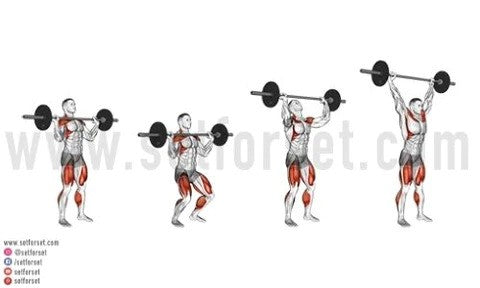
The push press is the one true power movement on this list. Most trainees do not include enough explosive work in their programs, and this is one of the easiest ways to fix that.
It also adds some lower-body contribution to a push session because you must create force through hip and knee extension. Being a power exercise, it trains a large amount of total-body musculature while emphasizing the shoulders and triceps.
2. Bench Press:
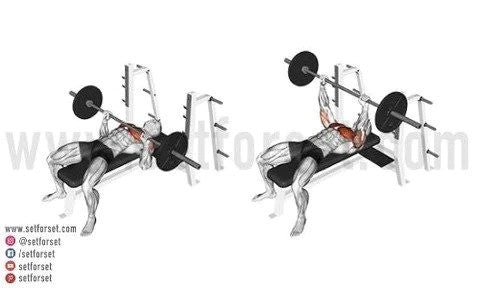
The bench press is still one of the best pressing lifts there is. It allows you to overload the pecs, shoulders, and triceps with significant weight while giving you a simple way to measure progress over time.
3. Overhead Shoulder Press:
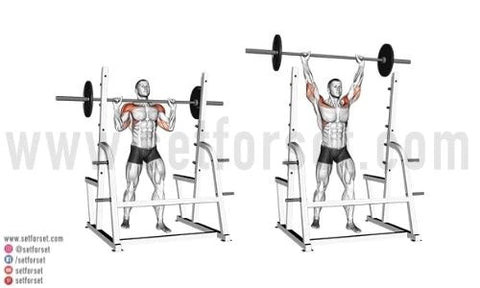
The overhead shoulder press used to be the king of upper-body pressing, and for many lifters it still is. It builds the shoulders, upper back, and triceps while demanding good mobility and a strong brace from your core.
Pro tip: On lighter sets, add a shrug at the top for extra upper trap work.
4. Dumbbell Incline Press:
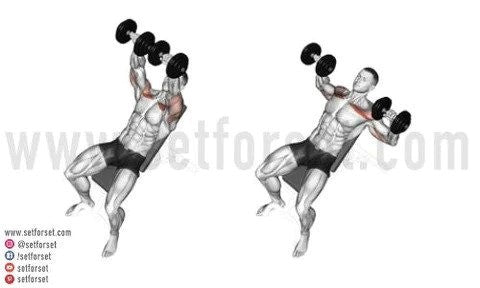
The incline dumbbell press is one of the best ways to target the upper chest while also getting a strong range of motion through the shoulders. Set the bench somewhere around a 30-40 degree incline.
5. Dips:
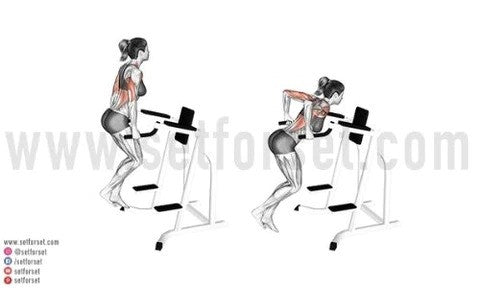
Dips are one of the best bodyweight pushing movements you can do. They hammer the chest, shoulders, and triceps and provide a movement pattern that is difficult to fully replicate with machines or barbells.
If your goal is a bigger chest, dips deserve a place in the conversation.
6. Upright Row:
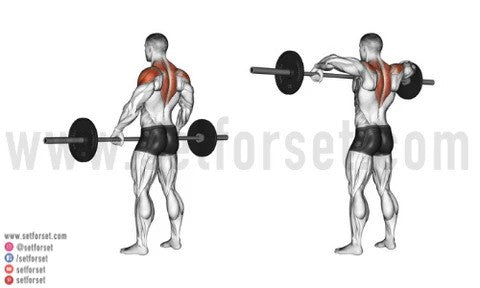
The upright row sits somewhere between a push and a pull movement, but it fits well on push day because of how much it emphasizes the delts and upper traps.
7. Cable Fly:
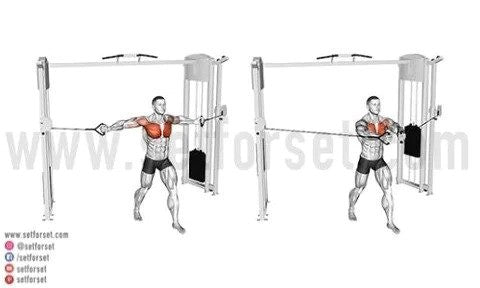
The chest fly is a great accessory movement for the chest and front delts. It is especially useful for creating tension in the pecs and getting a hard squeeze in the shortened position.
8. Skull Crushers:
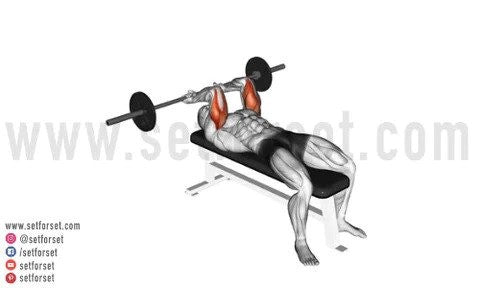
Old school and still effective. Skull crushers are one of the best tricep isolation movements there is. Use an EZ-curl bar if that feels better on your elbows.
9. Tricep Pressdowns:
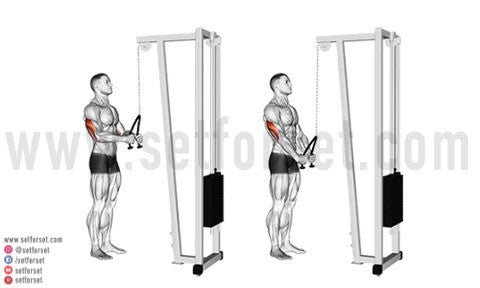
Tricep pressdowns are incredibly versatile. Rope, reverse-grip straight bar, pronated straight bar, and angled handle variations all work well. Rotate them to keep training fresh.
Check out our Pushing Exercises Guide to learn more about pushing movements.
Top Pulling Exercises
- Deadlift
- Chin Ups
- Bent-Over Barbell Row
- Kroc Rows
- Close-Grip Seated Row
- Frontal Shrug
- Face Pull
- Bicep Curl With Cable Machine
Let's learn how to perform each.
1. Deadlift:

The deadlift is one of the most effective barbell movements there is. Even though it is often categorized as lower-body dominant, it is truly a full-body lift and fits very well on pull day.
It heavily trains the hamstrings, glutes, spinal erectors, traps, and lats while still involving the quads. If you do not want to pull conventionally, there are several deadlift alternatives that can fill a similar role.
2. Chin-ups:
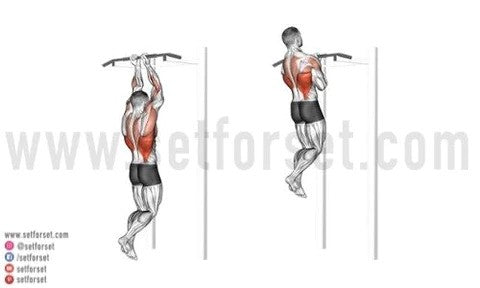
Chin-ups are one of the best pulling exercises in existence. They train the lats, upper back, biceps, and core extremely well, and they are easy to progressively overload once bodyweight becomes too easy.
Want to know how they compare to pull-ups? Check out Pull Ups vs Chin Ups.
3. Bent-Over Barbell Row:
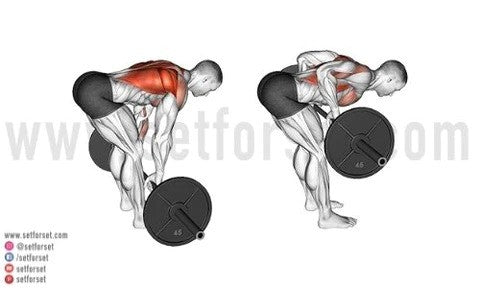
The bent-over barbell row builds mid-back and upper-back thickness while also hammering the lats. Since you are hinged over, your posterior chain also has to work hard isometrically to keep you in position.
Bent-over barbell rows work well with overhand or underhand grips depending on what you want to emphasize.
4. Kroc Rows (For Intermediate and Advanced):
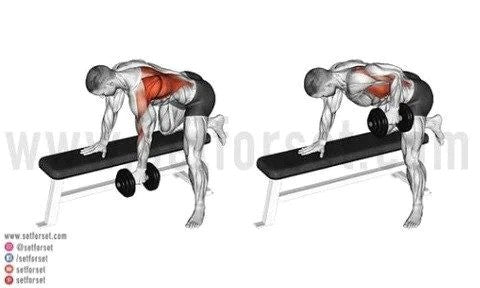
Beginners should usually stick to standard dumbbell rows first. But if you have some experience, Kroc rows are a brutally effective way to overload the back with heavy weight and high reps.
Think of these as controlled chaos. You use some body English, move serious weight, and accumulate a ton of reps.
5. Close-Grip Seated Row:
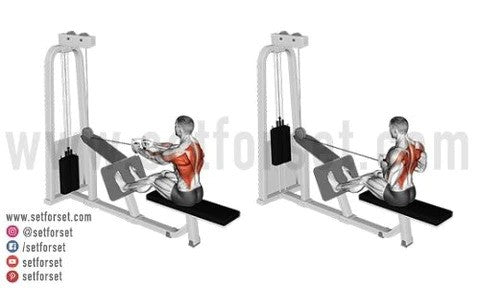
The close-grip seated row is a great hypertrophy movement. It lets you slow things down, focus on the squeeze, and accumulate quality volume without loading the lower back the same way bent-over rows do.
Grip choice matters here too. Neutral, rope, and wider handles can all be rotated in. For more great row variations, check out our Seated Cable Row Alternatives.
6. Frontal Shrug:
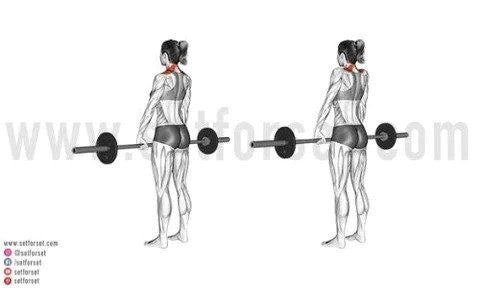
If you want upper traps that stand out, direct shrug work helps. The frontal shrug, performed with the hands in front of the body, is a strong option for loading the upper traps hard.
Pause at the top for a full squeeze. That short range of motion needs intent.
7. Face Pull:
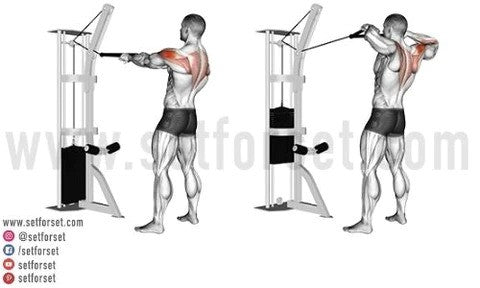
Face pulls are one of the best accessory pulling exercises you can add to a PPL split. They strengthen the rear delts, traps, rhomboids, and the muscles that help control the scapula, which can improve posture and shoulder health.
Want more options? Check out these Face Pull Alternatives.
8. Bicep Curl With Cable Machine:

It is smart to include at least one movement that specifically trains elbow flexion. Cable curls are a great choice because they are easy to adjust and make it simple to rotate grip styles and attachments.
- Rope Attachment
- Hammer Curl
- EZ Handle
- Reverse Grip
Looking for even more information on pulling movements? Check out our Pulling Exercises Guide.
Top Leg Exercises
- Back Squat
- Front Squat
- Barbell Hip Thrust
- Leg Press
- Lunges
- Sumo Deadlifts
1. Back Squat:
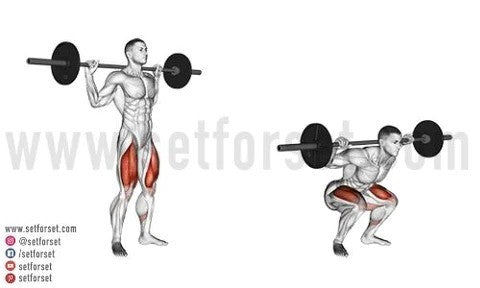
The back squat is still one of the best total lower-body lifts there is. It builds size and strength through the quads, glutes, hamstrings, and core all at once.
2. Front Squat:
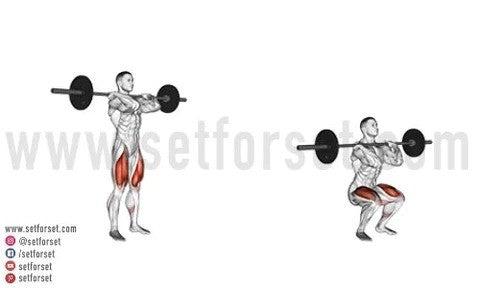
The front squat shifts more of the demand onto the quads and core because the bar is held in front of the body. That more upright torso makes it a very useful movement for athletes and lifters who want more anterior chain emphasis.
Read more about the differences in our Front Squat vs Back Squat article.
3. Barbell Hip Thrust:
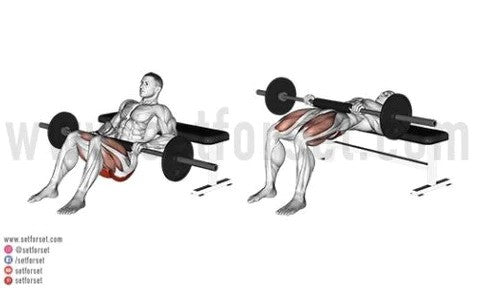
The barbell hip thrust is one of the best movements for the glutes and a great accessory to improve deadlift and squat performance. Start lighter than you think if you are new to them.
4. Leg Press:
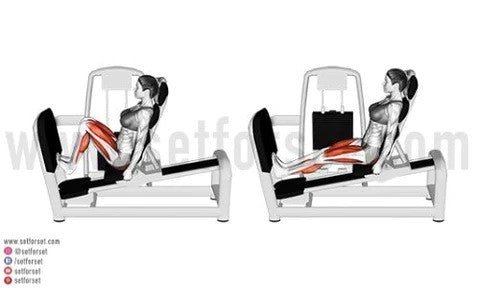
The leg press is a valuable machine movement because it lets you train the lower body hard without placing the same demand on the lower back as squats and deadlifts. You can also alter foot placement and angle to slightly shift muscle emphasis.
For more options, check out Leg Press Alternatives.
5. Lunges:
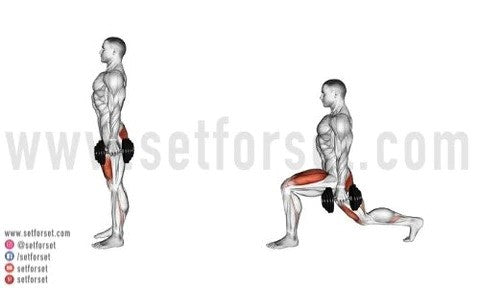
Lunges are deceptively brutal. They hammer the quads, glutes, hamstrings, and calves while also challenging balance and coordination. They also work well with just bodyweight or dumbbells, which makes them extremely versatile.
Want similar options? Check out these Lunge Alternatives.
6. Dumbbell Sumo Deadlifts:

Dumbbell or kettlebell sumo deadlifts are an underrated lower-body builder. The wider stance and increased knee flexion can increase quad and adductor involvement, while still training the glutes and hamstrings effectively.
Alternative Exercises
Here are more exercises that work well in a PPL routine. You can swap any of the exercises in the routine for a comparable exercise found in the table below:
Alternative Pushing Day Exercises |
Alternative Pulling Day Exercises |
Alternative Leg Day Exercises |
Dumbbell Press |
T-Bar Row |
Trap Bar Deadlift |
Close-Grip Bench Press |
Rack Pulls |
Leg Press |
Push-ups |
Landmine Rows |
Romanian Deadlift |
Landmine Presses |
Pull-Ups |
Bulgarian Split Squat |
Seated Shoulder Press or Dumbbell Press |
Straight Arm Lat Pulldown |
Calf Raises |
Arnold Press |
Lat Pull Down |
Leg Curl |
Overhead Tricep Extensions |
Standing Single Arm Row (with Cable) |
Leg Extension |
The Top Benefits of Using a Push Pull Leg Split
Using a push pull leg routine offers a ton of practical benefits. Here are a few of the biggest ones.
- Easy To Plan: Using a PPL scheme makes it simple to organize your week and know exactly what movement patterns to train that day.
- It’s Effective: Push Pull Legs has been used successfully by lifters of all levels for years. If you apply progressive overload, it can help you gain muscle, gain strength, lose fat, or do some of all three.
- Trains Every Body Part: PPL naturally helps you cover all major muscle groups without overcomplicating your week.
- Adds Variety: If you train more than 3 days per week, your weekly layout can change often enough to keep training interesting.
- Easy To Personalize: You can keep PPL as the base and then add accessory work, extra rest, or specialty sessions depending on your goals.
Push Pull Legs. Go.
We just covered everything you need to know about this highly effective push-pull-legs workout split.
Use this routine as your base, then adjust the details to fit your recovery, schedule, equipment, and training level.
Versatility, adaptability, and great results. That is exactly what you want from a training split.
As long as you keep the core idea intact, a PPL workout plan can work very well for you.
Interested in more great workout routines? Check out our free database of workouts & plans.
OR take our quick workout quiz to find the perfect program in under a minute.

References:
- Farias D de A, Willardson JM, Paz GA, Bezerra E de S, Miranda H. Maximal Strength Performance and Muscle Activation for the Bench Press and Triceps Extension Exercises Adopting Dumbbell, Barbell, and Machine Modalities Over Multiple Sets. Journal of Strength and Conditioning Research. 2017;31(7):1879-1887. doi:https://doi.org/10.1519/jsc.0000000000001651
-
Lee JH, Cynn HS, Choi WJ, Jeong HJ, Yoon TL. Various shrug exercises can change scapular kinematics and scapular rotator muscle activities in subjects with scapular downward rotation syndrome. Human Movement Science. 2016;45:119-129. doi:https://doi.org/10.1016/j.humov.2015.11.016
0 comments