


Offset loading is a resistance-training method in which one side of the body or implement carries more load than the other. The uneven load creates rotational and side-bending forces that your trunk, hips, and shoulders must resist while you complete the main exercise.
Common examples include suitcase carries, bench presses with mismatched dumbbells, offset kettlebell squats, and steel mace exercises. When programmed carefully, offset training can increase trunk-muscle demand, challenge coordination, expose technique problems, and add a useful stability component to traditional strength work.
Offset loading is best used as a supplement, not a replacement for standard bilateral and unilateral training. The goal is controlled asymmetry, not recklessly loading one side of a barbell.
Offset Loading At A Glance
| Category | Recommendation |
| Best For | Trunk stability, loaded carries, coordination, grip, and exercise variation |
| Experience Level | Beginner to advanced when the exercise and load are appropriate |
| Best Starting Exercises | Suitcase carries, offset goblet squats, half-kneeling presses, and steel mace holds |
| Programming | One or two offset exercises per workout |
| Loading | Start light with a small difference between sides |
| Main Limitation | Heavy asymmetry can reduce performance and increase compensatory movement |

What Is Offset Loading?
Offset loading is a training method where you lift a weight that is heavier on one side than it is on the other. It can be done with a barbell, dumbbells, kettlebells, and even cable pulleys and plate loaded machines. Moreover, there are training tools that are designed with an offset weight, like the steel mace.
An example would be doing DB bench press with a 25LB dumbbell in one hand and a 40LB dumbbell in the other…or farmer carries with a 50lb kettlebell in one hand and a 80lb kettlebell in the other…or a landmine squat, carry, or press where the load sits away from the body's centerline…or any steel mace exercise where the mace is held horizontally, as the weight of a steel mace is offset by nature of design.
Offset loading is like that time you added a plate on one side of a barbell when pyramiding up and forgot to put it on the other side, then you realized your mistake after you unracked it...except, in this case, you did it on purpose.
It’s really that simple. We don’t need to overcomplicate the meaning of offset loading…so, let’s move on.
Offset Loading vs Unilateral Training
Some people confuse offset exercises with unilateral exercises.
Although the two work your body in a very similar manner, there is a difference.
Put simply, unilateral exercises are single leg or single arm movements, while offset exercises involve both extremities but one side has a heavier load. Offset loading is uneven/unbalanced loading.
The names really do a good job of explaining it.
Examples of unilateral exercises:
- Single arm farmer carries
- Single arm bicep curls
- Pistol Squats
- One leg dumbbell stiff legged deadlift

Examples of offset exercises:
- Farmer carries with a 50LB dumbbell in one hand and a 80LB dumbbell in the other
- Offset dumbbell curls with a modest weight difference between hands
- Offset kettlebell front squats or landmine squats
- Stiff-Legged Deadlift with one dumbbell in one hand only.
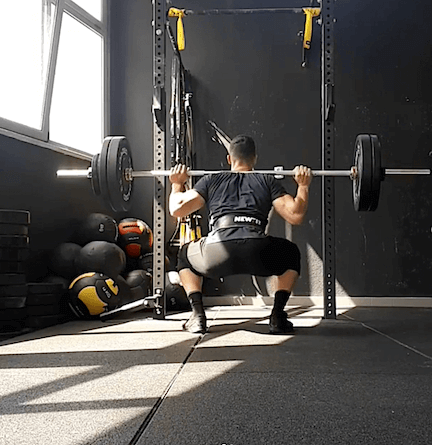
Offset loading is like a bilateral and unilateral hybrid exercise.
Bilateral, Unilateral, Offset exercises are all utilized by pro athletes and pro fitness trainers. Why? Because they are all effective and they all play a role in enhancing performance.
Now, as for the benefits of offset and unilateral exercises, they are very similar. Unilateral exercises increase strength on a weaker side, improve balance and kinesthetic awareness, enhance core strength, and they help people break plateaus...
Now, let’s have an in-depth look at some of the benefits of offset loading, specifically.
11 Potential Benefits Of Offset Loading
Have a look at the benefits of offset load training so you can get a sense of how it can help your training and overall fitness…
1. Exposes and Fixes Imbalances and Asymmetries
Offset loading may reveal side-to-side differences in control, bracing, or force production. It can be one useful tool for addressing asymmetry, but it is not automatically the best option and should be combined with conventional unilateral and bilateral training.
Offset loading is particularly effective for neural drive (teaching the brain to fire the correct muscles), motor control, muscle activation patterns, intramuscular tension (deep muscle tension), and motor unit synchronization and neuromuscular performance (muscles working together to coordinate the contraction of a single muscle).
With even loads, your dominant side often does more work. Offset loading will pinpoint your weaknesses and help you even out your imbalances.
Offset work can contribute to strength and control, especially in tasks that require asymmetric force. However, reducing a measured asymmetry does not guarantee better performance or fewer injuries. Use it alongside evidence-based strategies for managing muscle imbalances.
Overall, offset loading coupled with standard loading lifts is key to achieving high-level strength and performance…
Now, it’s important to understand that uneven loading targets your body differently than even loading. It is not as if they just work one side more than the other. Any particular exercise performed offset will target muscles and the body differently than the same exercise done with an even weight load. Even if you are trying to make a weaker side catch up, you still need to perform offset loading exercises on both sides.

2. Very Effective For Core Strength & Spinal Stabilization
Offset loading is a way to directly train the core without directly training it. Paradoxical? Well, let us explain. With offset loading, you are going to be working your core and spinal stability as every exercise is going to require you to resist rotation and/or lateral flexion.
If you load more weight on one side, you create flexion and rotation forces at the hips and trunk that wouldn’t be there with regular bilateral exercises.
You will be required to keep your body squared forward, not leaning or rotating to the side the heavier load is on. This can substantially increase the demand on your trunk musculature. It will work all of your spinal stabilizers, your entire core musculature, your hips, AND your sling system.
As for the benefits of a stable core, it’s important for preventing injury and enhancing performance in sports, lifting, and pretty much every single activity. A stronger trunk can improve your ability to control spinal motion under load.
So, offset loading exercises fill two needs with one deed - you work the primary muscle that you are targeting and your core. In a world that puts great emphasis on core strength and stability, what better way to optimize your time and your strength than with offset exercises…
Word of Caution: If you have a spinal injury history, tread lightly with offset load training. That doesn’t mean don’t do it. As offset loading will strengthen your spinal stabilizers and help you become more resilient, but don’t go too heavy. A steel mace is the perfect place to start. In any case, consult your doctor.
3. Greatly Improves Mechanics (Eliminates the use of Momentum and Jerky Motions)
With normal loading parameters, it is easy to use momentum and jerky mechanics to lift the weight. This is especially common when using heavy loads. Conversely, offset loading is very effective for eliminating the use of momentum and jerky movement patterns. With offset loading, you will have to lift the weight in a controlled way, with both sides of your body in unison. Every shifting and jerky movement will be noticeable as it will throw off your coordination. You’ll need to synchronize your entire body to complete the movement. This effectively eliminates the habit to use momentum and leads to much improved body mechanics in the long run.

4. Helps Promote Good Form and the Correct Range of Motion
With better mechanics comes better form. Offset loading helps eliminate excessive range of motion, which often comes with momentum and jerky mechanics.
You will have full body tension at all times, which promotes stable and strong right-angles, rather than unrestrained range of motion. This is very common in lifters and is often a cause of injury.
Offset loading can make technical errors easier to notice, but it does not automatically improve form. Use a load you can control and stop the set when posture changes. The integration of core stability, complete full body tension and better body mechanics leads to cleaner form and ultimately stronger lifts.
5. Great For Targeting Specific Muscles
With good mechanics and form comes more tension on the targeted muscles. Offset exercises can change which muscles contribute and how hard the stabilizers work. They can support hypertrophy, but they are not inherently superior to balanced loading for muscle growth. Moreover, this makes a lighter weight offset tool like the steel mace more effective than using even load of the same weight.
6. Increases Intramuscular Tension & Neural Drive
Another benefit within the benefit of having good mechanics - strict movement and keeping tight throughout the entire exercise - is you will be increasing intramuscular tension. Maintaining muscular tension can make light-to-moderate loads challenging, but muscle growth still depends on sufficient effort, volume, recovery, and progressive overload.
What’s more, your neural drive will improve, allowing for a better mind to muscle connection.
Any carryover to balanced lifts will depend on training specificity, exercise selection, and progressive overload.

7. Improves Mental Toughness, Concentration & Fortitude Through Its Meticulous Form
Offset loading is tough on both the mind and the body. The strict movement, which requires full body tension at all times (especially the core and hips), means you will need to seriously concentrate during an exercise. All the stress of life fades away as your focus drills in on the movement. This can make the exercise mentally engaging because poor concentration quickly affects posture and control.
Every set is going to test your conditioning and your ability to focus….You could say offset load training is only for the strong minded, yet offset loading creates a strong mind. Moreover, it de-stresses the mind when it’s all said and done.
8. Enhances Coordination and Motor Control
One of our favorite aspects of offset loading is how it greatly improves balance, coordination and motor control. The offset load will put your balance and coordination to the test, requiring your core and hip stability to take control. You become much more aware of your coordination as well. The results over time is a noticeable improvement in motor control. This is especially apparent with the steel mace training, as many exercises involve movement patterns that move your through multiple planes of motion. This will constantly put your stability, balance and coordination in check.
With offset exercises, you need a good foundation to begin with, or else it will be very difficult to perform the exercises. If you are really lacking in the balance and coordination department, start light. A light weight steel mace (10lb mace) is a good place to start. The great thing about the mace is depending on your hand position on the handle, you can make the weight more or less offset. So with a 10 or 15LB mace, you can slowly improve your balance and coordination by gradually changing your hand positioning.

9. Changes the Dynamics of an Exercise - Stabilizer Muscles
When performing the same exercise that you would with an even load in an uneven load format, you will be targeting your body differently, and completely changing the dynamic of the exercise, as we mentioned earlier.
The main thing you will notice is your stabilizer muscles are being worked more. So, while you will be targeting the same muscles that you would with an even bilateral load (albeit in a different way) you will have the added benefit of a considerable increase in stabilizer muscle strength for any given exercise.
Now, there are no specific stabilizer muscles to speak, each exercise targets primary muscles, secondary muscles and stabilizer muscles differently.
For example, with bent over rows, the hamstrings are one of the stabilizer muscles. However, with stiff-legged deadlifts, hamstrings are the primary muscle. So, it all depends on the exercise.
The point is, your stabilizer muscles will be noticeably working harder, as well as your core (which is often a stabilizer for many even weight load exercises).
Stronger supporting musculature may improve control and force transfer, but no exercise can guarantee injury prevention.
10. Makes Lighter Loads More Effective and Allows an Increase in Training Volume & Frequency
Offset exercises often require less absolute weight than their balanced counterparts because the trunk and stabilizers limit performance. That can make them useful when you want a demanding exercise without chasing maximal external load.
Do not assume lighter automatically means easier on the body or faster to recover from. Asymmetric loading can increase trunk demand and may create more fatigue when the imbalance is large. Progress the load, range of motion, and asymmetry gradually.
For hypertrophy or fat loss, offset exercises should be judged by the same fundamentals as other movements: effort, total volume, exercise quality, nutrition, and recovery.

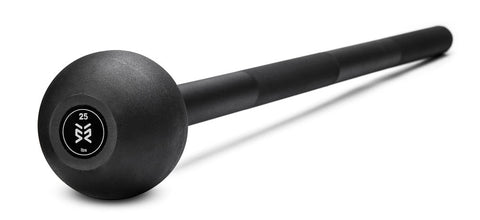
The Steel Mace may seem light but it is incredibly challenging.
11. Practical for Sports & Everyday Life
Offset load training is very practical for sports performance and daily life. Day to day, much of what we deal with is uneven. It’s not a perfectly balanced world. Moreover, we are constantly relying on our balance and stability.
For example, when you carry groceries, there is a very slim chance the bag in your left hand is going to weigh as much as the bag in your right hand. Or let’s say you have your kid in one arm and a bag in the other. Maybe you are moving furniture, is the furniture perfectly balanced? Nope. We could go on and on. It’s a beautifully unbalanced world.
In sports (and daily life), we twist, turn, lean, accelerate, and decelerate. We have to resist motion (anti-rotation) as much as we have to create it. We even have to resist it as we create it. For example, when throwing a punch in boxing, you have to create force through your extremities while resisting force at the trunk as you land the punch. The same thing applies to throwing a football, kicking a soccer ball, hitting a baseball, and so on.
Overall, offset loading is a practical and effective way to increase your capacity for all of these things. It will make you more powerful and it will make you more resilient to injury, which is often caused by an inability to resist force. Stability is a key component to longevity.
In a nutshell, offset loading exercises will benefit any fitness enthusiast. The biggest impact you will see after employing offset loading is an improvement in core strength and stability (in a functional manner), overall strength gains, and injury resilience.

Best Offset Loading Exercises
| Exercise | Primary Challenge |
| Suitcase Carry | Anti-lateral flexion, grip, and gait control |
| Offset Farmer Carry | Trunk stability with both hands loaded |
| Offset Goblet Squat | Squat control and trunk bracing |
| Half-Kneeling One-Arm Press | Anti-rotation and shoulder control |
| Single-Arm Row | Rotational control and upper-back strength |
| Offset Dumbbell Bench Press | Pressing control and trunk stability |
| Front-Rack Kettlebell Carry | Posture, breathing, and shoulder stability |
| Steel Mace Offset Hold or Press | Leverage, grip, and multiplanar control |
Offset Loading Safety Tips
- Start with carries, holds, and dumbbell or kettlebell exercises before using uneven barbell loads.
- Use a small asymmetry at first. Research on asymmetric pressing suggests larger imbalances can increase compensation and reduce performance.
- Perform equal work with the heavier side on the left and right.
- Keep the spine and pelvis controlled rather than forcing perfectly rigid posture.
- End the set when leaning, twisting, or grip failure changes the movement.
- Avoid maximal loads and ballistic repetitions until you have substantial experience.
- People with active back pain, recent surgery, or significant joint instability should seek individualized guidance.
Offset Loading is Highly Versatile
Offset loading can be done with most fitness equipment, such as dumbbells, Barbell, kettlebells, cable pulleys and plate loaded machines.
All you need to do is have one side heavier than the other.
As for exercises, offset loading can be applied to any exercise. Chest presses, squats, lunges, rows, overhead presses, curls, and so on. You can even do it with push up and pull ups depending on how you position yourself and your hands.
There are truly so many ways to utilize offset loading. Pretty much any exercise can be done in an offset variation.
The Steel Mace - Offset Training Tool By Nature of Design
The steel mace is a fitness training tool that is offset by design. For those just getting into offset training, steel maces are the best place to start.
All of the benefits above apply to steel mace training. You can read more about the steel mace benefits here. The practical benefits the steel mace provides is one of the reasons it is spreading like wildfire in the fitness world. It offers a completely unique way of training, and one that is the definition of functional (and not in the beaten down sense of the word that we are so used to hearing in the fitness realm)
This video by Paulina Kairys is the perfect example of what you can do with a steel mace in terms of offset loading.
Note: Although the steel mace is our essential tool for offset load training, we do like to employ offset barbell exercises and some offset dumbbell and kettlebell offset exercises, as they are great as well. We also try other offset training techniques here and there to test and explore our capabilities. Ultimately, to see what works best. Steel mace training and offset Barbell exercises have proven to be our most effective techniques for reaping the benefits of offset loading.
HOW TO PROGRAM OFFSET EXERCISES INTO YOUR TRAINING REGIMENT:
First, let us be clear. Offset Loading should not replace standard weight lifting. It is simply an effective ancillary modality to put into effect. What we are recommending is that you combine offset loading with standard strength training, with offset exercises taking the auxiliary role.
Here’s an analogy for how we feel about offset exercises…
If fitness was a movie, conventional lifts would be the main actor and offset exercises (as well as unilateral exercises) would be the supporting actor.
Another way to look at it if you aren’t doing offset loading…
Think of offset loading as the missing piece of a 4-piece puzzle. You have the general picture without it, but you are missing a vital chunk of the picture.
The four pillars of fitness are strength, endurance, flexibility, and balance. Offset loading helps make a couple of those pillars a lot stronger.
So, how to program offset loading into your training regimen?
The best and most efficient way to program offset loading into your training program is simply adding one or two offset exercises into each workout.
Here is an example of a shoulder day:
1A: Military Press x 5 sets
1B: Steel Mace Overhead Press x 4
2A: Arnold Presses x 3
2B: Lateral Raises x 3
2C: Front Raises x 3
3A: Upright Rows x 3
3B: Offset KB Farmer Carries x 3
4A: Hanging Leg Raises x 4
As you can see, the base of the workout are standard conventional lifts. The offset exercises are ancillary.
One of the best things about offset loading is you are targeting your core, so on days where you are doing offset exercises, you can eliminate one or two of your core exercises (eliminate the supplemental core exercises - i.e. if you do hanging leg raises and crunches, remove the crunches and place the offset load exercise into your primary workout).

Here is another example of programming offset loading. For this one let’s look at leg day.
1A: Squats x 4
1B: Offset Barbell Back Squats x 3
2A: Stiff Legged Deadlifts x 4
2B: Offset Barbell Stiff-Legged Deadlifts x 3
3A: Split Squats x 3
3B: Single-leg Leg Press x 3
4A: Good Mornings x 3
4B: Ham Curls x 3
5A: Offset Steel Mace Lunges x 3 (each side of course)
With all of the offset exercises, you are doing the exercise on both sides (so three sets is 3 sets each side)
For steel mace offset exercises, depending on the weight, we recommend a 5-10 rep range, although you could go higher. For barbell exercises, we recommend a 3-5 rep range. Make it so it’s challenging in that range. If you aren’t sure how heavy to start, simply go light. You will get an understanding of what you can do with time. Moreover, for barbell offset loading, start with a smaller difference in the offset weight, around 5-10 pounds compared to the lighter side. So if you have 45 on one side, add 55 to the other side.

Frequently Asked Questions
Is offset loading the same as unilateral training?
No. Unilateral training primarily uses one limb, while offset loading creates unequal resistance across the body. Some exercises, such as suitcase carries, can fit both descriptions.
Does offset loading strengthen the core?
It can increase trunk-muscle demand because the body must resist rotation or side bending. Loaded carries and asymmetric presses are particularly useful for this purpose.
Can offset loading fix muscle imbalances?
It may help expose or train side-to-side differences, but it is not a guaranteed fix. Unilateral exercises, technique work, load management, and sport-specific training may also be needed.
Is offset loading good for hypertrophy?
It can build muscle when sets are performed with sufficient effort and progressive overload. Balanced exercises are usually easier to load heavily, so offset work is best used as an accessory.
How heavy should offset exercises be?
Start lighter than your standard version of the exercise. Use the smallest load difference that creates a noticeable challenge without changing your technique.
Are uneven barbell squats safe?
They are an advanced variation and are not necessary for most lifters. Carries, kettlebells, dumbbells, landmine exercises, and steel maces provide safer and easier-to-control options.
How often should I use offset loading?
One to three sessions per week can work, depending on volume and recovery. Most people only need one or two offset exercises in a session.
Final Thoughts
Offset loading is a useful way to challenge trunk stability, coordination, grip, and movement control. It also adds variety to familiar exercises and can prepare you for the uneven loads that appear in sports and daily life.
Its benefits should not be exaggerated. Offset training is not automatically better for strength, hypertrophy, posture, or injury prevention than balanced resistance training. It works best as a carefully dosed accessory to conventional bilateral and unilateral exercises.
Start with carries and controlled dumbbell, kettlebell, or steel mace movements. Keep the asymmetry modest, train both sides, and progress only when your technique remains consistent.
Closing Note:
There are a lot of seasoned professionals out there implementing offset training into their programs and their client's programs. With a simple YouTube search, you will see plenty of examples of this. If you look to any pro athletes training, you will also see offset loads being utilized during workout sessions. Coaches and athletes have used offset loading for years, but popularity is not proof. Its value comes from the specific challenge it creates and how well that challenge matches the athlete's needs. We are sure offset loading has been used by the pros for a long time, people are simply just becoming aware of offset loading’s what, how, when and why thanks to social media.
New to offset loading? We highly recommend Steel Maces. They are an easy and effective way to lay the first stones of offset training. Moreover, you will find them useful in the long run and in many other ways.
What The Research Shows
Research on offset loading is still limited, but several findings support a measured approach:
- Asymmetric bench pressing can maintain activation on the loaded side while reducing activation on the lighter side, which means the exercise changes the stimulus rather than simply making both sides work harder.
- Offset squat research shows that unequal loading can alter ground-reaction forces and muscle activation between limbs.
- Loaded carries challenge trunk musculature across multiple planes and provide a different demand than traditional lifting exercises.
- Larger asymmetries can increase compensatory trunk activity and reduce performance, supporting the use of modest load differences.
These findings support offset loading as a supplemental tool, not as a universal replacement for balanced strength training.

If you're looking to purchase a barbell for your home gym, check out the XMark CROWBAR 7' Barbell it has the perfect knurling for enhanced grip and sleeves that are secured with a maintenance-free snap-ring lock system and brass bushings.
We also recommend you read this guide to buying a barbell as there's a lot more to barbells than you might think!
***These are affiliate ads above where we will receive a small commission from any purchase you make. We only recommend products that we use ourselves!***
Picture credits to Nick Nilsson & Anthony Rock
References
- Saeterbakken, A. H., et al. “Muscle Activity in Asymmetric Bench Press Among Resistance-Trained Individuals.” 2020.
- Ottinger, C. R., et al. “Offset Loading in a Bilateral Squatting Movement Pattern.” 2023.
- Ellestad, S. H., et al. “The Quantification of Muscle Activation During the Loaded Carry and Hold Exercises.” 2024.
- McGill, S. M., et al. “Trunk Muscle Activation and Lumbar Spine Motion, Load, and Stiffness.” 2009.
- Yan, B., et al. “Effects of Asymmetric Load Bench Press Offset Training on Muscle Activation and Fatigue.” 2025.
0 comments